

Skip to content

Guide

Outdoor Garden Lights: Comprehensive Guide for Professionals
Outdoor Garden Lights

Outdoor Garden Lights: Comprehensive Guide for Professionals

ATOM LED

Outdoor garden lighting has surged in importance for landscape professionals, combining aesthetics, safety, and sustainability. Well-designed lighting accentuates landscape features and extends usable hours, turning gardens into inviting evening spaces. Beyond visual appeal, outdoor lighting enhances security by deterring intruders and improving safe navigation after dark. A layered lighting scheme combining uplights, downlights, and spotlights is widely recommended to highlight textures, structures, and focal points throughout a garden. Professional designers consistently agree that effective outdoor lighting relies on using multiple techniques rather than a single light source. Professional Outdoor Garden Lighting by Atom Led At Atom Led, outdoor garden lighting is approached as a balance of design precision, technical reliability, and long-term performance. As a specialist store focused on outdoor garden lights, Atom Led supplies products engineered for professional landscape applications, including residential gardens, commercial outdoor spaces, and architectural landscapes across the UK. Unlike generic lighting retailers, Atom Led curates outdoor lights for garden use that meet real-world installation demands, such as: UK-appropriate IP ratings for year-round weather exposure Stable LED drivers designed for long cable runs Consistent colour temperature for cohesive landscape schemes Fixtures suitable for low-voltage and professional mains systems This professional-first approach ensures landscape architects, installers, and contractors can specify lighting solutions with confidence, knowing performance, safety, and longevity are built into every product. Lighting Technologies and Components Atom Led focuses heavily on modern LED and low-voltage systems, as these offer the best balance between efficiency, control, and safety for outdoor garden landscape lights. The product range prioritises high-efficacy LEDs, sealed housings, and weather-resistant connectors to reduce common failure points in outdoor installations. Modern outdoor garden lights rely primarily on LED and solar technology. LEDs now dominate global lighting markets due to their energy efficiency, long lifespan, and reliability. Compared to halogen or incandescent bulbs, LEDs consume significantly less power and operate for many more hours, making them ideal for outdoor use where lights often run overnight. Solar-powered garden lights continue to grow in popularity. By combining photovoltaic panels, rechargeable batteries, and LED light sources, solar fixtures eliminate the need for wiring and are well suited to remote or hard-to-access garden areas. They also offer a sustainable lighting option that continues operating during power outages or adverse weather conditions. In practice, professionals often deploy a combination of low-voltage luminaires and solar fixtures. Low-voltage systems, typically operating at 12 volts, are commonly used for pathways, steps, borders, and feature lighting. These systems are flexible, safe, and well suited to modular garden layouts. Larger or permanent installations may require mains-powered fittings, which should always be installed by a qualified electrician. For professional-grade results, it is essential to select fixtures rated specifically for outdoor use. IP44 is generally suitable for wall-mounted or sheltered fittings, while IP65 or higher is recommended for ground-mounted or exposed garden lights. Smart Control Systems and Light Quality Smart outdoor lighting systems are increasingly specified in professional garden projects. Many modern fixtures integrate with control platforms that allow zoning, scheduling, dimming, and motion-based activation. These systems support energy efficiency while providing flexibility for different usage scenarios. Warm-white LEDs in the 2700K to 3000K range are typically recommended for outdoor gardens. This colour temperature enhances natural materials, renders plants accurately, and reduces blue-spectrum output, which benefits both human comfort and wildlife. Fixture Styles and Design Applications Outdoor garden lighting includes a wide variety of fixture types, each serving a specific design or functional role. Common options include: Wall-mounted lanterns Bollard and pole lights Path and step markers Spotlights and spike lights Recessed ground lights Decorative string and festoon lighting Lantern-style fixtures often suit traditional or heritage gardens, while bollard lights provide subtle, modern illumination along paths and borders. Decorative string lights remain popular for seating areas and pergolas, offering both functional light and atmosphere. Materials and finishes also play a key role in design integration. Options range from stainless steel and powder-coated aluminium to natural materials such as wood, bamboo, or rattan. The most effective designs align fixture style, material, and light output with the overall character of the landscape. Safety, Installation, and Standards Outdoor electrical installations must meet strict safety requirements. All circuits should be RCD-protected, and all cables and connectors must be rated for external use. While UK wiring regulations do not define garden-specific rules, best practice includes weatherproof cabling, secure burial methods, and appropriately rated junctions and sockets. Solar and battery-powered lights remove wiring risks entirely, while mains-powered systems must always be installed by qualified professionals. Product compliance is equally important. Professional installations typically specify fixtures that conform to recognised lighting standards and certifications, ensuring performance and durability over time. UK Building Regulations encourage responsible external lighting by discouraging over-illumination. Timers, daylight sensors, and motion detectors are recommended to reduce energy use and limit unnecessary nighttime lighting. Specifying Outdoor Garden Lights Through Atom Led For professionals, sourcing outdoor garden lights is about more than appearance. Reliability, compliance, and installation efficiency are equally important. Atom Led structures its product selection around the needs of professionals working within the outdoor garden lights UK market. Key specification considerations supported by Atom Led include: Ingress Protection Products are selected with IP65 and higher ratings for exposed garden environments, suitable for planting beds, pathways, and perimeter areas. Voltage Stability Low-voltage outdoor garden lights are designed to minimise voltage drop across long cable runs, maintaining consistent brightness throughout the installation. Material Durability Fixtures use corrosion-resistant aluminium, stainless steel, or UV-stable polymers to withstand moisture, frost, and prolonged sun exposure. Consistent Light Output Atom Led avoids mixed LED bins, ensuring uniform colour and brightness across entire garden lighting schemes. By focusing on these factors, Atom Led supports lighting designs that perform reliably not just at installation, but for years to come. Environmental Impact and Wildlife Considerations Reducing ecological impact is an increasingly important aspect of outdoor lighting design. Artificial light at night can disrupt insects, birds, bats, and other nocturnal species. Poorly directed or excessively bright lighting contributes to light pollution and ecological imbalance. Professionals address these concerns by specifying shielded fixtures that direct light only where required and by using warm-white LEDs that minimise blue light output. Designs should aim for the lowest effective light levels and preserve unlit areas where possible to maintain natural habitats. Designed for UK Gardens and Climate Conditions Outdoor garden lighting in the UK must withstand prolonged moisture, temperature changes, and extended winter operating hours. Atom Led supplies outdoor garden lights UK customers can rely on in all seasons. The product range is aligned with: UK electrical safety expectations Typical British weather exposure Energy-efficient performance for long nights Colour temperatures suited to both traditional and modern landscapes This UK-focused approach supports projects ranging from small residential gardens to large-scale commercial landscapes. Best Practices for Professional Outdoor Garden Lighting Key principles for successful garden lighting include: Plan with purpose by defining safety, functional, and aesthetic goals Use layered lighting techniques to create depth and visual interest Prioritise energy-efficient LED and solar solutions Respect wildlife by limiting light spill and blue-spectrum output Ensure compliance with electrical and environmental regulations Specify durable fixtures designed for long-term outdoor use Why Professionals Choose Atom Led Outdoor garden lights are a long-term investment. Poor product selection leads to failures, callbacks, and compromised design outcomes. Atom Led exists to remove that risk for professionals and informed homeowners. By choosing Atom Led, customers benefit from: A store dedicated exclusively to outdoor and landscape lighting Products selected for professional installation standards Clear specifications for confident project planning Lighting solutions that enhance gardens without compromising sustainability Whether designing subtle pathway lighting or complete outdoor lighting schemes, Atom Led provides dependable solutions that support both creativity and performance. Explore the full Atom Led outdoor garden lighting range and specify with confidence. FAQ's Q1: What IP rating should I specify for outdoor garden lights? A: For most exposed garden fixtures choose IP65 or higher (dust-tight and protected against water jets). Use IP44 only for sheltered wall or soffit lights. For fittings buried in planting beds or subject to splashing/puddles, prefer IP67/IP68 depending on exposure and immersion risk. Q2: Should I use low-voltage (12V) or mains (230V) garden lighting? A: Low-voltage (12V) systems are safer, easier to zone, and ideal for pathways and spotlights. Mains (230V) suits long runs and high-power fixtures but requires qualified electrical installation. Many professional schemes mix both: low-voltage for distributed accents and mains for larger architectural elements. Q3: How do I prevent voltage drop on long LED runs? A: Use thicker gauge cable, shorter runs by adding feed points, or specify higher-voltage systems with local step-downs. At quoting stage, calculate cable runs and expected current. Atom Led supplies LED drivers and cable options sized for professional runs. Q4: What colour temperature is best for gardens? A: 2700K–3000K (warm white) is the professional standard for gardens: it flatters plant tones, reduces blue light that attracts insects, and preserves nocturnal wildlife. Q5: Are solar garden lights reliable enough for professional projects? A: Modern solar fixtures are excellent for low-to-medium-intensity applications and remote locations. For critical, high-use, or consistently bright lighting (e.g., commercial sites or long winter operation), mains or battery-backed systems remain more reliable. Q6: How can lighting design reduce impact on wildlife? A: Use shielded fixtures, downward-directed beams, low lumen output, warm colour temperatures, and time-based dimming. Preserve dark corridors or refuges in the landscape for fauna. Q7: What controls are recommended for outdoor schemes? A: Timers, photo‑sensors (dusk-to-dawn), motion sensors, and zoned dimming via DALI/DMX or smart controllers are common. Controls reduce energy use and allow different scenes for events, security, and daily use. Q8: What standards and certifications should I look for? A: Look for CE marking and compliance with relevant luminaire standards (e.g., EN 60598). For LEDs, ensure reputable driver standards and manufacturer test data for lumen output, CRI, and lifetime (L70). Q9: How do I select durable materials for coastal or wet climates? A: Choose marine-grade stainless steel, powder-coated aluminium with corrosion-resistant finishes, or UV-stable polymer housings. Check IP and salt-spray resistance specifications for coastal projects. Q10: Can I mix fixtures from different manufacturers in one project? A: You can, but maintain consistency in colour temperature, CRI, beam angles, and lumen output. Mixing different LED bins or drivers can produce visible colour or dimming inconsistencies. Q11: How often should outdoor fixtures be serviced? A: Annual inspections are typical for most garden schemes. Check seals, lens clarity, connections, and driver performance. Replace failed LEDs or drivers promptly to avoid mismatched light on the scheme. Q12: What connectors and cabling do professionals prefer? A: Use IP-rated, tool-free waterproof connectors for field joins and glands or sealed junction boxes for permanent terminations. Use outdoor-rated, UV-stable cable specified to the correct conductor size for current and run length. Q13: Do Atom Led products come with warranties? A: Atom Led supplies professional-grade fixtures that include manufacturer warranties. Warranty terms vary by product—check the specific product page for duration and coverage details. For projects, request warranty documentation at procurement. Q14: How do I avoid light spill and neighbour complaints? A: Use full-cutoff fixtures, shielded fittings, lower mounting heights where appropriate, and time-based dimming or curfews. Document the lighting zones and control strategy in your design report to satisfy planners. Q15: Will LED lighting attract fewer insects than older lamp types? A: Warm-white and amber LEDs attract fewer insects than cool-white LEDs or mercury vapor sources. Choose lower CCTs and minimal UV/blue content to reduce insect attraction.

Read more

Guide

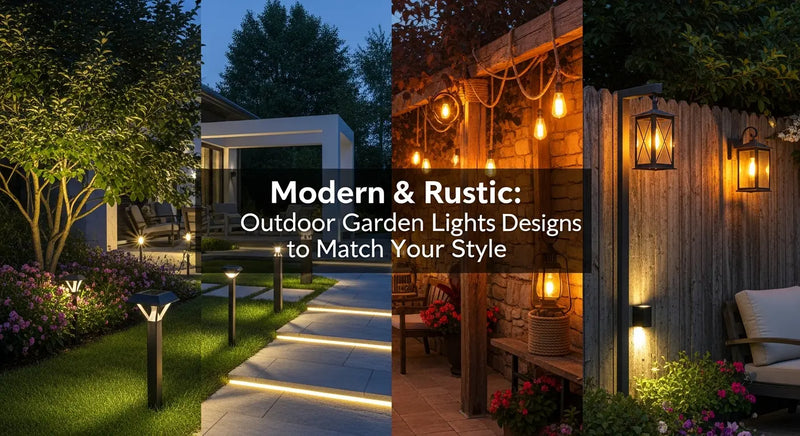
Modern & Rustic: Outdoor Garden Lights Designs to Match Your Style
Outdoor Garden Lights

Modern & Rustic: Outdoor Garden Lights Designs to Match Your Style

ATOM LED