

Skip to content

Orders after 3rd April ship Tuesday, 7th April due to Easter courier delays.

LED Strip Lights

Choosing the right LED strip lights in 2026 decides whether your project looks professional or half-finished — the wrong voltage, CRI, or IP rating turns a clean install into a callback. ATOM LED supplies COB and SMD LED strip lights from UK stock, with technical support from a team that has specified and installed thousands of metres across kitchens, bathrooms, commercial fit-outs, and outdoor landscapes throughout the UK.

Our 2026 LED strip light range covers 12V, 24V, and 48V COB strips, single colour and RGBW colour-changing options, plus CRI90+ across every COB product and run lengths up to 50 metres on a single dual-feed 48V circuit. Every strip ships from Telford with free UK delivery, a 5-year warranty on COB DC voltage products, and FreeCut technology that lets you cut at any point without voiding your warranty.

12V · 24V · 48V COB & SMD · CRI90+ · FreeCut Technology · IP20–IP68 · Single Colour · RGBW · Addressable RGB · 5-Year Warranty · Free UK Delivery · UK Stock

  1. What are LED strip lights and which type do you actually need?
  2. COB vs SMD LED strip — which technology performs better in 2026?
  3. What voltage should you choose — 12V, 24V, or 48V?
  4. How do you pick the right colour temperature for your space?
  5. What IP rating do you need for bathrooms, kitchens, and outdoor areas?
  6. How do you correctly dim LED strip lights without flicker?
  7. How do RGBW and addressable RGB LED strips work?
  8. What driver and power supply do you need for LED strip lights?
  9. How do you install LED strip lights step by step?
  10. What are the most common LED strip light mistakes to avoid?
  11. How do you calculate voltage drop and maximum run length?
  12. Where are LED strip lights used — residential, commercial, and outdoor applications?
  13. Frequently asked questions about LED strip lights
  14. Why do UK professionals choose ATOM LED for strip lighting?

Quick decision summary: If you need a clean, dot-free light line for kitchen pelmets, coving, or under-cabinet lighting, start with 24V or 48V COB LED strip. If you need colour-changing for hospitality or feature walls, choose RGBW COB strip. If you need long runs over 10 metres with minimal voltage drop, 48V is the practical choice. If you need outdoor or bathroom-rated strip, check IP67 or IP68 — not IP65.

Who this page is for: Electricians specifying LED strip for residential and commercial projects, interior designers choosing strip lighting for kitchens, bathrooms, and living spaces, and homeowners researching LED tape lights before buying or hiring an installer. This guide covers every technical decision you need to make before purchasing.

Who this page is NOT for: If you specifically need LED neon flex for signage or decorative contour lighting, that is a separate product category. If you need aluminium extrusion profiles for mounting, those are also covered in their own dedicated collections. This page focuses entirely on flexible LED strip tape and the knowledge required to buy and install it correctly.

Common buying mistakes to avoid:

  • Choosing IP65 for outdoor use: IP65 is surface-splash rated only and is not suitable for UK outdoor conditions or bathroom wet zones under BS7671 — you need IP67 minimum for outdoor and most bathroom zones.
  • Buying a dimmable driver for RGBW strip: RGB and RGBW strips require a non-dimmable constant voltage driver paired with a dedicated RGB controller — dimmable drivers cause flicker, colour shift, and premature failure.
  • Powering strip while still on the reel: Never power LED strip while coiled — the heat cannot dissipate, which destroys the adhesive backing and creates a fire risk.
  • Mounting strip directly onto bare metal: Without insulation between the strip and the metal surface, you risk short circuits across the solder pads.

What are LED strip lights and which type do you actually need?

LED strip lights are flexible circuit boards with surface-mounted LEDs, available in COB (Chip on Board) and SMD (Surface Mounted Diode) formats. The right type depends on your application — COB provides a continuous dot-free light line for architectural use, while SMD offers individual LED points suited to signage and accent work. Both run on DC low voltage from 12V to 48V.

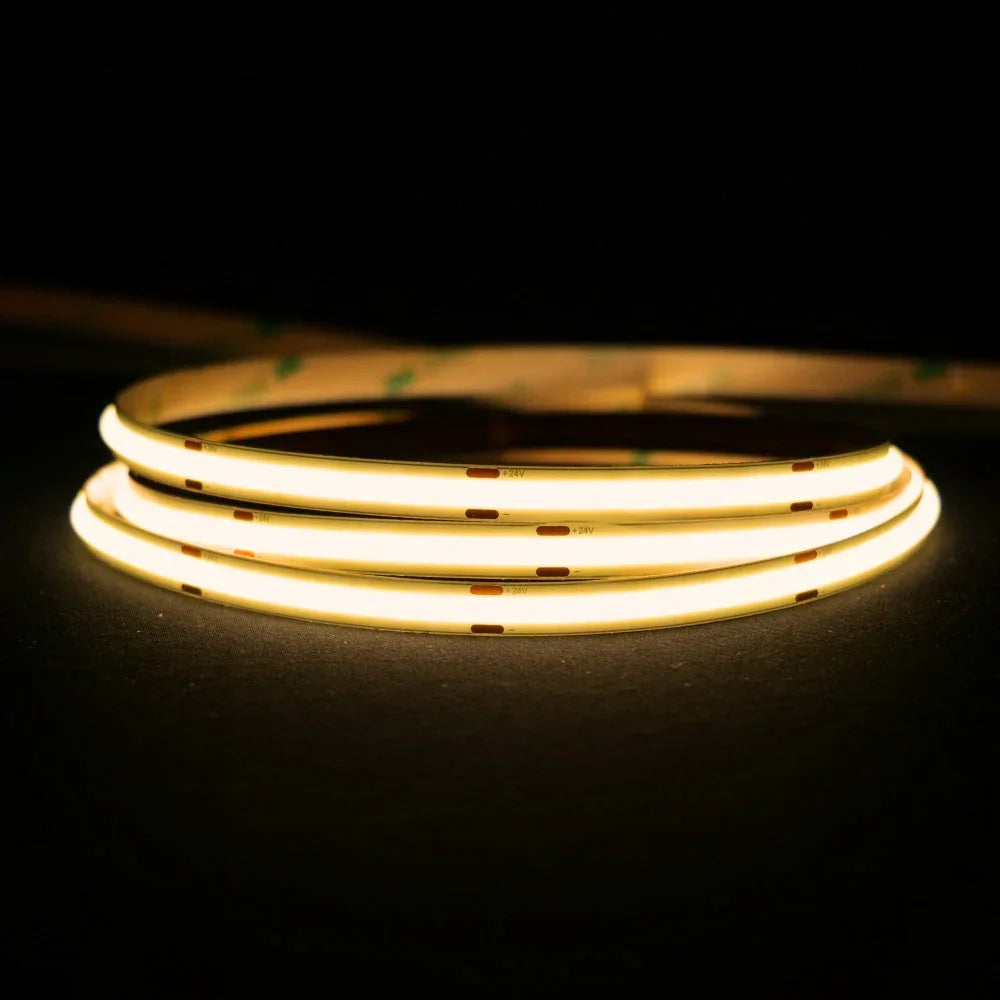
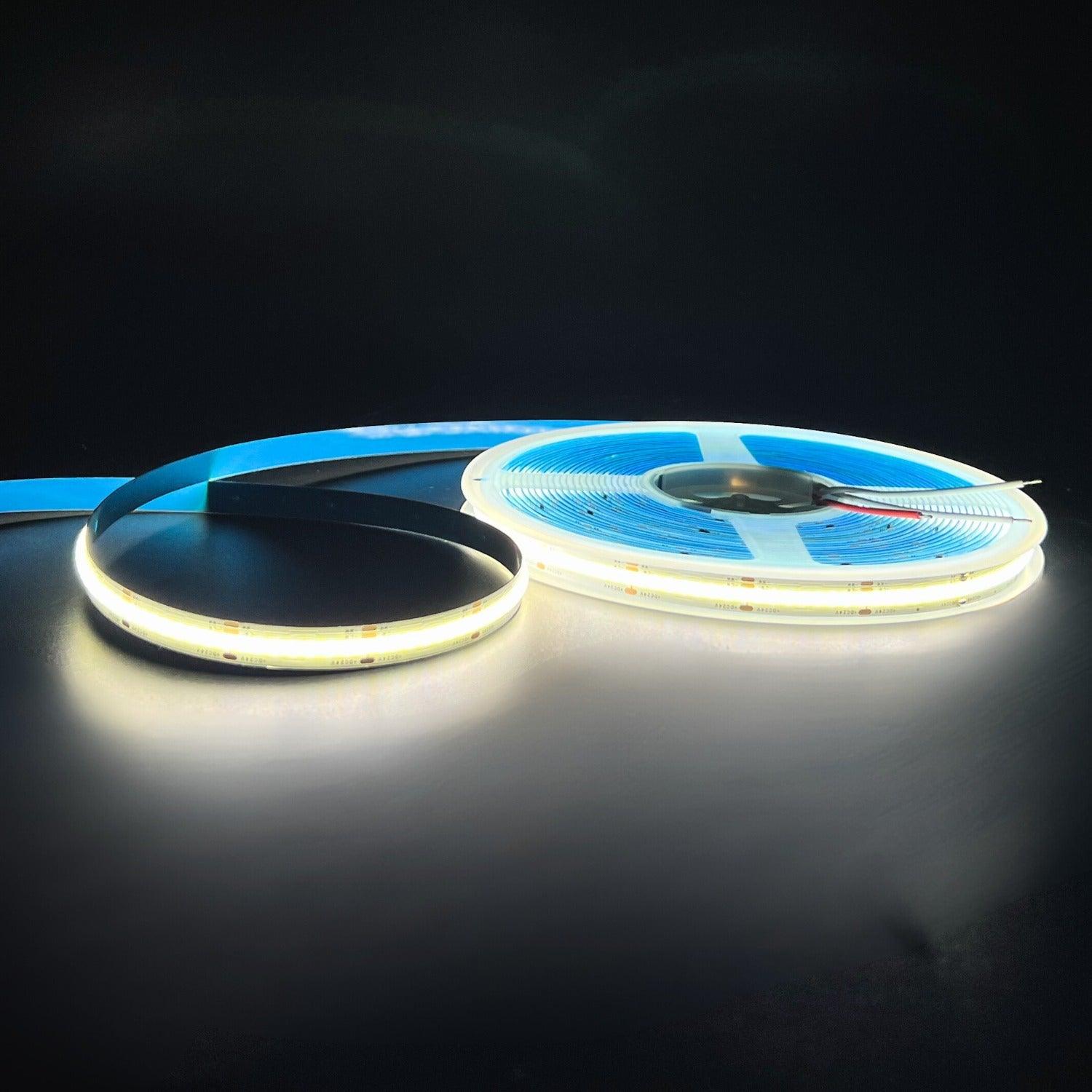
The most significant shift in the LED strip market since 2024 has been the move from traditional SMD strips — where individual LED chips create visible hot spots — to COB technology, where densely packed chips sit beneath a phosphor layer to produce a smooth, unbroken line of light. For most residential and commercial installations in 2026, COB strip has become the default recommendation because it removes the need for diffuser channels in many applications.

  • COB LED strip: Produces a continuous light line with no visible dots, typically 320–528 LEDs per metre, ideal for exposed installations where the strip is partially or fully visible.
  • SMD LED strip (2835/5050): Individual LED packages with visible spacing between chips, still useful for concealed cove lighting, signage back-lighting, and budget applications where dot visibility is not a concern.
  • Single colour strip: Fixed colour temperature — warm white (2700K–3000K), natural white (3500K–4000K), or cool white (5000K–6500K) — best for task lighting, ambient lighting, and architectural highlighting.
  • RGBW colour-changing strip: Four-channel strip with red, green, blue, and a dedicated white LED — the dedicated white channel produces clean, accurate white light that standard RGB cannot match.
  • Addressable digital RGB strip: Individual pixel control for running effects, colour chasing, and dynamic scenes — used in hospitality, retail, and creative installations.

ATOM LED stocks all of these types from our Telford warehouse, with every COB strip rated at CRI90+ for accurate colour rendering in kitchens, retail displays, and anywhere colour fidelity matters. Browse the full COB LED strip range across all voltages to compare specifications.


COB vs SMD LED strip — which technology performs better in 2026?

COB LED strip outperforms SMD in light uniformity, colour consistency, and visual quality for almost every architectural and residential application in 2026. COB eliminates visible hot spots without requiring a diffuser, while SMD strips still produce individual LED dots that need channel diffusion to appear smooth. The performance gap has widened as COB density and efficiency have improved.

Feature COB LED Strip SMD LED Strip (2835/5050)
Light output Continuous dot-free line Individual LED dots with visible gaps
Typical LED density 320–528 LEDs/m 60–120 LEDs/m
Diffuser required Not required for most applications Required to eliminate hot spots
CRI (ATOM LED range) CRI90+ across all COB products Typically CRI80–CRI90
Colour consistency Excellent — phosphor layer blends output Moderate — individual chips may vary
Flexibility Higher — thinner PCB, tighter bending radius Moderate — thicker PCB limits bending
Heat management Requires aluminium profile for runs over 3m Requires aluminium profile for runs over 3m
Best applications Kitchen pelmets, coving, under-cabinet, display Concealed coves, signage, budget accent
Price point (2026) Approximately 15–30% higher than equivalent SMD Lower entry cost per metre

For any installation where the strip will be partially visible — floating shelves, open pelmets, glass-front cabinets, staircase nosings — COB is the only practical choice unless you add a diffuser profile. The cost difference between COB strip on its own versus SMD strip plus a diffuser channel typically favours COB once you factor in the profile, labour, and visual result.

  • Choose COB when: The strip is visible or semi-visible, you need CRI90+ colour accuracy, you want a clean modern light line, or you are installing in kitchens and bathrooms where quality is non-negotiable.
  • Choose SMD when: The strip is fully concealed behind a lip or inside a closed channel, the project is budget-constrained, or you are back-lighting signage where dot visibility does not matter.

ATOM LED supplies dot-free COB strip in 24V and 48V with FreeCut technology, meaning you can cut at any point along the strip without voiding the 5-year warranty — a feature that most competitors restrict to fixed cut points only.


What voltage should you choose — 12V, 24V, or 48V?

Voltage selection depends on run length, wattage, and installation context. 24V is the most versatile choice for residential runs up to 10 metres. 48V handles longer commercial runs up to 30 metres single-feed with half the voltage drop of 24V at the same wattage. 12V suits only short runs under 5 metres where legacy compatibility is needed, as voltage drop becomes significant quickly.

Specification 12V DC 24V DC 48V DC
Maximum single-feed run (single colour) Approximately 5m Up to 20m Up to 30m
Maximum dual-feed run (single colour) Approximately 8m Approximately 30m Up to 50m
Voltage drop rate Highest — problematic over 3m at higher wattages Moderate — manageable with correct wire gauge Lowest — half the drop rate of 24V at same wattage
Current draw at 60W 5.0A 2.5A 1.25A
Wire gauge flexibility Requires thicker cable Standard 0.75mm² adequate for most runs Thinner cable acceptable due to lower current
Safety classification SELV with isolated driver SELV with isolated driver Falls within SELV threshold under BS7671 (120V DC ripple-free max) with suitably isolated, safety-rated driver
Best for Short accent runs, legacy systems Kitchens, bathrooms, residential, most commercial Long commercial runs, retail displays, corridors

The practical advantage of 48V for 2026 projects is not just extended run length — it is the reduction in cable size, connector losses, and the number of power injection points required across a large installation. A hotel corridor that would need four separate 24V feeds can often be served by a single 48V feed from one end, reducing both material cost and installation time.

  • 12V recommendation: Only for replacement runs in existing 12V systems or very short accent strips under 3 metres — not recommended for new installations in 2026.
  • 24V recommendation: The standard for residential kitchens, bathrooms, bedrooms, and commercial spaces with runs under 10 metres — the widest product selection and driver availability.
  • 48V recommendation: Purpose-built for runs exceeding 10 metres, open-plan commercial spaces, retail perimeters, and any installation where reducing the number of power injection points matters.

Browse 24V single colour COB strip for most residential projects, or 48V single colour COB strip for extended runs. Both ship from our Telford warehouse with free UK delivery.


How do you pick the right colour temperature for your space?

Colour temperature determines the mood and functionality of your LED strip installation. Warm white (2700K–3000K) creates a relaxed, inviting atmosphere for living areas and hospitality. Natural white (3500K–4000K) provides accurate task lighting for kitchens, offices, and retail. Cool white (5000K–6500K) suits workshops, garages, and clinical environments where maximum visibility is the priority.

The most common mistake buyers make is choosing colour temperature based on brightness assumptions rather than the actual environment. Warm white at 3000K is not dimmer than cool white at 6000K — they produce the same lumens per watt — but the perceived brightness differs because cool white activates different photoreceptors. In kitchens, natural white (4000K) is typically the best balance between accurate food colour rendering and comfortable ambient light.

  • 2700K warm white: Living rooms, bedrooms, dining rooms, hotel rooms, restaurants — creates a warm, relaxed tone similar to traditional incandescent.
  • 3000K warm white: The most popular choice for residential kitchens and bathrooms in 2026, slightly crisper than 2700K while still feeling warm and comfortable.
  • 4000K natural white: Kitchen worktops, offices, retail displays, medical and clinical areas — provides accurate colour rendering without the yellow bias of warm white.
  • 5000K–6500K cool white: Workshops, garages, industrial inspection areas, photographic studios — high-contrast visibility but unsuitable for relaxation spaces.

Every ATOM LED COB strip is rated CRI90+, which means colours appear accurate and natural under the light. A CRI below 80 makes red tones appear muddy and skin tones look grey — this is immediately noticeable in kitchens where you view food, and in retail environments where product colours need to match customer expectations.


What IP rating do you need for bathrooms, kitchens, and outdoor areas?

IP rating determines where LED strip can be safely installed. IP20 is for dry interior locations only. IP65 handles surface splashes but is not suitable for UK outdoor conditions or bathroom wet zones under BS7671. IP67 withstands temporary immersion and suits most outdoor gardens and bathroom zones. IP68 handles continuous submersion for ponds, fountains, and fully exposed outdoor installations.

One of the most common specification errors in the UK market is using IP65 strip outdoors. IP65 protects against water jets from a single direction — it does not protect against driving rain from multiple angles, standing water, condensation build-up, or the sustained damp conditions typical of British weather. For any permanent outdoor installation in the UK, IP67 is the minimum responsible specification, and IP68 is recommended for ground-level, buried, or water-feature applications.

  • IP20 (no coating): Dry interior use only — under cabinets, inside wardrobes, behind TV units, dry cove lighting with no exposure to moisture.
  • IP65 (silicone-coated top surface): Indoor areas with occasional surface splashes — dry-zone kitchen pelmets, enclosed bathroom ceilings outside wet zones.
  • IP67 (full silicone sleeve): Outdoor gardens, patios, bathroom wet zones (Zones 1 and 2), covered exterior areas — withstands temporary immersion to 1 metre.
  • IP68 (potted or fully sealed): Ponds, fountains, swimming pool surrounds, permanently exposed outdoor installations, underground cable runs — rated for continuous submersion.

For outdoor-rated options, see the outdoor COB LED strip collection which includes IP67 and IP68 products tested to UK conditions. If you need help matching the right IP rating to your bathroom zone classification under BS7671, contact our technical team on 01952 370028.


How do you correctly dim LED strip lights without flicker?

Flicker-free dimming requires matching the right dimmer type to your driver and strip configuration. For single colour LED strip, use a trailing-edge dimmer with a dimmable constant voltage driver — leading-edge dimmers frequently cause flicker and buzzing. For RGBW and RGB strip, never use a dimmable driver — use a non-dimmable constant voltage driver paired with a dedicated RGB controller that handles dimming through PWM.

The trailing-edge versus leading-edge distinction is the single most impactful upgrade you can make if you are experiencing flicker with LED strip. Leading-edge dimmers were designed for incandescent and halogen loads — they chop the front of the AC waveform, which causes the small capacitive load of an LED driver to oscillate. A trailing-edge dimmer chops the tail of the waveform instead, producing a smooth dimming curve. Replacing a leading-edge dimmer with a trailing-edge model typically costs approximately £15 and solves the majority of domestic LED flicker complaints.

  • Single colour dimming: Trailing-edge wall dimmer connected to a TRIAC dimmable constant voltage driver, which outputs smooth DC to the strip. Browse TRIAC dimmable LED drivers for compatible units.
  • RGBW and RGB dimming: Non-dimmable constant voltage driver connected to a dedicated LED controller — the controller manages colour mixing and brightness through PWM signals at high frequency to avoid visible flicker.
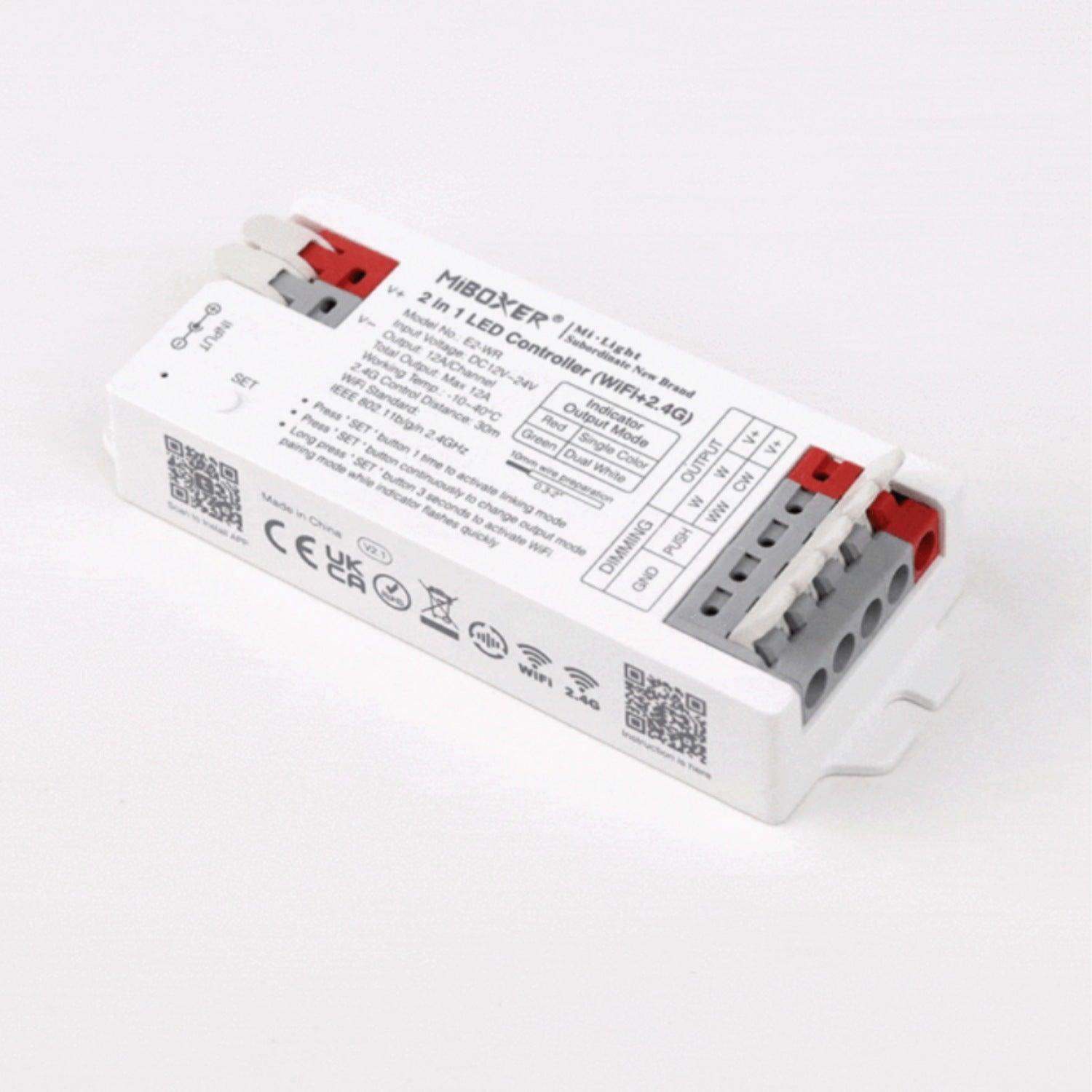
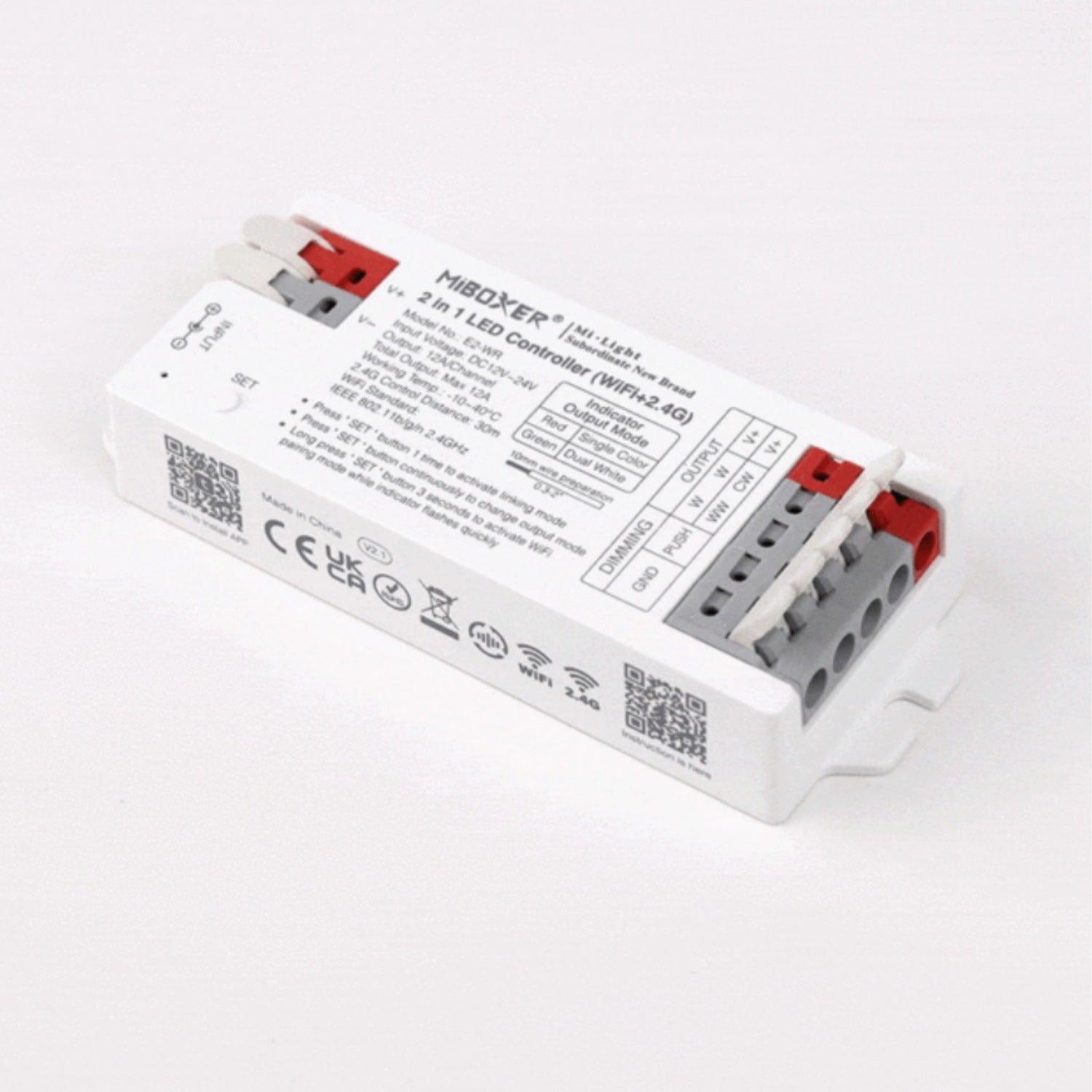
  • Smart dimming: Wireless controllers from brands like MiBoxer, Skydance, and Ltech allow app-based and voice-controlled dimming — these connect between the driver and the strip, not at the mains side.
  • 0–10V and DALI dimming: Used in commercial installations where centralised building management systems control lighting zones — requires compatible drivers and typically professional specification.

A common error we see from customers who call our Telford technical team: connecting RGBW strip to a dimmable driver and then wondering why colours shift at low brightness. Dimmable drivers modulate output voltage, which changes the current balance across the four colour channels unevenly. The correct setup is always a non-dimmable driver at full output, with the controller handling all dimming and colour management downstream.


How do RGBW and addressable RGB LED strips work?

RGBW strip combines red, green, and blue LEDs with a dedicated white LED on each chip, producing both saturated colours and clean, accurate white light. Standard RGB strip without the white channel can only approximate white — the result is a cold, violet-tinged output. Addressable RGB strip adds individual pixel control, allowing running effects, colour chasing, and dynamic scenes through SPI controllers.

The distinction between RGB and RGBW is critical for anyone planning a colour-changing installation that also needs to function as a white light source. RGB strip mixes red, green, and blue to produce what appears to be white, but the spectral output is narrow and uneven — it lacks the broad-spectrum phosphor output of a true white LED, making it unsuitable for task lighting, kitchens, or anywhere accurate colour rendering matters. RGBW solves this with a fourth channel that is a purpose-built white LED, typically available in 3000K or 4000K.

  • RGB strip: Three-channel colour mixing for accent and decorative use only — produces saturated reds, greens, blues, and mixed colours, but cannot produce clean white.
  • RGBW strip: Four-channel output with a dedicated white LED — switch between colour effects and true white light within the same installation, making it suitable for kitchens and living spaces that serve dual purposes.
  • Addressable RGB (SPI): Each LED or small group of LEDs is individually controllable via a digital SPI signal — used for running water effects, colour chasing, pixel mapping, and dynamic hospitality lighting.

All RGBW and RGB strips require a non-dimmable constant voltage driver and a dedicated RGB or RGBW controller. Never connect colour-changing strip to a standard dimmer switch — it will not function correctly. For RGBW options, see RGBW COB strip in 24V. For addressable pixel strip, browse the addressable digital RGB COB collection.


What driver and power supply do you need for LED strip lights?

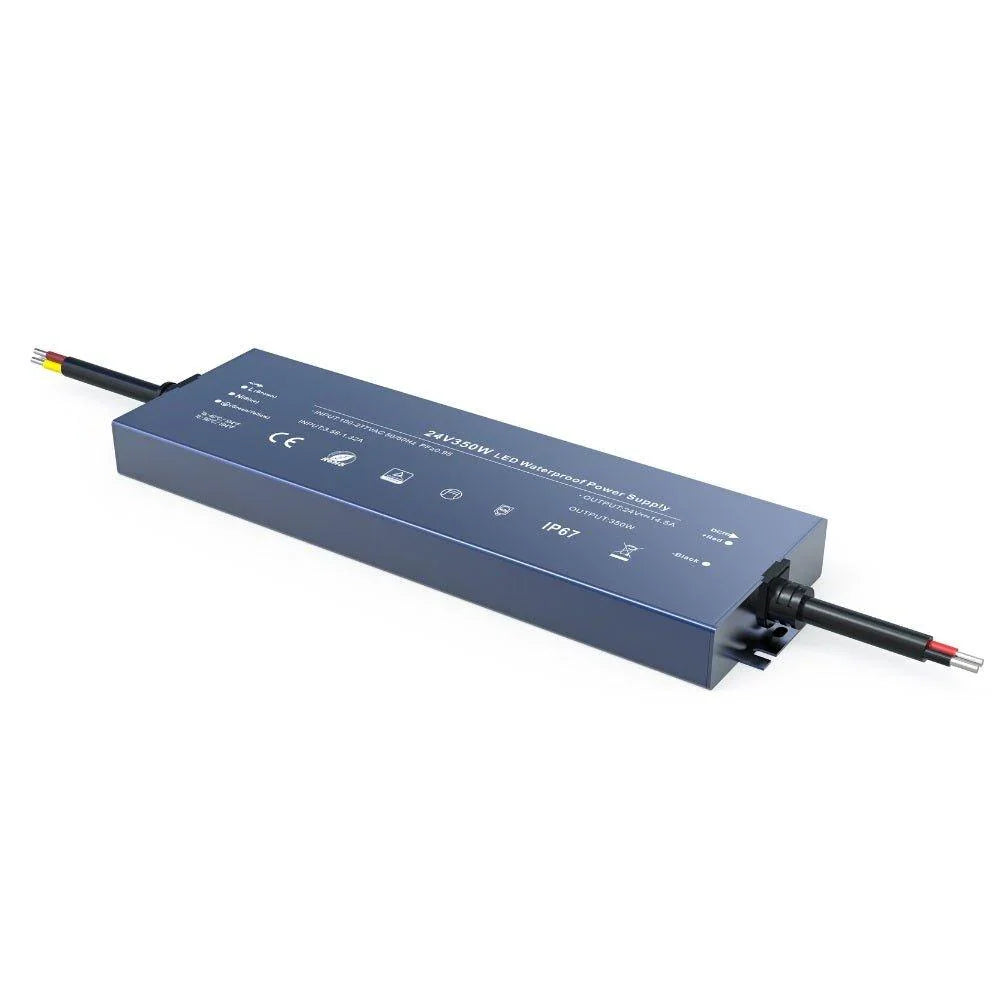
Every LED strip light requires a constant voltage driver that converts 230V AC mains to the correct DC voltage — 12V, 24V, or 48V. The driver wattage must exceed the total strip wattage by at least 20% to avoid thermal stress and ensure long-term reliability. Single colour strips pair with either dimmable or non-dimmable drivers depending on dimming requirements, while RGB and RGBW strips must always use non-dimmable drivers with a separate controller.

Calculating driver wattage is one of the first steps in any LED strip installation. Multiply the strip wattage per metre by the total metres you are installing, then add a minimum 20% headroom. For example, a 14.4W/m COB strip running for 8 metres draws 115.2W total — you would specify a driver rated at approximately 140W or above. Running a driver at or above its rated capacity generates excess heat, shortens component lifespan, and can trigger thermal shutdown mid-evening.

  • Constant voltage drivers (CV): The standard type for LED strip — they output a fixed DC voltage (12V, 24V, or 48V) at a variable current depending on load. Browse the full LED drivers and transformers range.
  • TRIAC dimmable drivers: Compatible with standard trailing-edge wall dimmers for smooth brightness control on single colour strip — see TRIAC dimmable drivers.
  • Non-dimmable drivers: Required for RGBW and RGB installations where the controller manages brightness — using a dimmable driver with colour-changing strip causes flicker, colour shift, and premature failure.
  • IP-rated drivers: For outdoor, bathroom, or damp installations, use an IP67-rated driver that can be mounted in unprotected locations — dry-rated IP20 drivers must be installed in accessible, ventilated enclosures.

For voltage-specific driver selection, browse 24V LED drivers or 48V LED drivers. Our technical team can calculate the exact driver specification for your project — call 01952 370028 or email operations@atomled.co.uk.


How do you install LED strip lights step by step?

LED strip installation follows a consistent process regardless of voltage or type: plan your layout and measure accurately, select the correct driver with 20% wattage headroom, prepare the mounting surface, make all electrical connections before applying power, and test the full circuit before fixing the strip permanently. Following these steps in order prevents the most common installation failures and ensures a clean, long-lasting result.

  1. Step 1 — Plan the layout and measure the run: Measure the total length of strip required, noting any corners, junctions, or returns. Calculate total wattage by multiplying watts per metre by total metres. Add 20% headroom for driver sizing. Decide on single-feed or dual-feed based on run length — for 24V single colour, single-feed works up to approximately 20 metres; for 48V, up to approximately 30 metres.
  2. Step 2 — Select the driver and dimming method: Match the driver voltage to your strip voltage exactly — a 24V strip on a 48V driver will burn out instantly. For single colour with dimming, choose a TRIAC dimmable driver with a trailing-edge dimmer. For RGBW, choose a non-dimmable driver and a separate RGB controller. Confirm the driver wattage exceeds total strip wattage by at least 20%.
  3. Step 3 — Prepare the mounting surface: Clean the mounting surface thoroughly — the 3M adhesive on the strip back requires a dust-free, dry, smooth surface for permanent adhesion. For runs over 3 metres, or anywhere heat dissipation matters, mount the strip inside an aluminium profile. Never mount LED strip directly onto bare metal without insulation — the conductive surface can short-circuit the solder pads on the PCB.
  4. Step 4 — Cut the strip to length: ATOM LED strips with FreeCut technology can be cut at any point without voiding the warranty. Other strips must be cut only at designated cut marks (typically every 25mm–100mm depending on the product). Use sharp scissors or a craft knife for a clean cut perpendicular to the PCB.
  5. Step 5 — Wire the connections using parallel wiring: For multi-run installations, always wire strips in parallel — not in series. Series wiring multiplies voltage drop across each run, causing the far end of the strip to appear noticeably dimmer. Use soldered connections or quality push-fit connectors. Keep all wire runs as short as practical and use appropriate gauge cable for the current draw.
  6. Step 6 — Connect the driver and test before fixing: Connect the strip to the driver with all wiring in place but the strip not yet adhered to the surface. Power on and verify even brightness along the full length, correct colour temperature, dimming function, and controller operation if applicable. Check for any flickering, colour inconsistency, or dim sections. Testing before permanent installation saves hours of rework.
  7. Step 7 — Apply the strip to the surface and secure: Peel the adhesive backing in sections as you apply — do not remove the entire backing at once. Press firmly along the full length. For aluminium profiles, slide the strip into the channel and clip the diffuser cover. Ensure no sections of strip are coiled or overlapping — LED strip must never be powered while coiled, as heat builds up, destroys the adhesive, and creates a fire risk.

If you need strip connectors, extension cables, and cutting tools, browse our accessories collection. For installations requiring professional support, our technical team is available Monday to Friday, 9am to 5pm on 01952 370028.


What are the most common LED strip light mistakes to avoid?

The five most common LED strip failures are caused by incorrect IP rating selection, wrong driver pairing, series wiring instead of parallel, powering strip while coiled, and mounting directly onto bare metal. Each of these errors is preventable with basic technical knowledge, and fixing them after installation typically costs more in labour than the strip itself. Understanding these mistakes before buying saves time, money, and callbacks.

  • Using IP65 outdoors in UK conditions: IP65 is rated for surface splashes from a single direction only. British weather includes driving rain, sustained damp, frost, and condensation — none of which IP65 is designed to handle. Specify IP67 minimum for outdoor gardens and patios, IP68 for ground-level or water-feature installations.
  • Connecting a dimmable driver to RGBW strip: RGB and RGBW strips require a non-dimmable constant voltage driver. The controller handles dimming via PWM. A dimmable driver modulates voltage, which changes the current balance across colour channels, producing colour shift, flicker, and shortened LED lifespan.
  • Wiring multiple runs in series: Series wiring forces the total current through each strip section sequentially, multiplying voltage drop. The result is noticeably dimmer light at the end of the run. Parallel wiring feeds each section independently from the driver, maintaining consistent brightness across all runs.
  • Powering strip while still on the reel: An unrolled strip dissipates heat along its length. A coiled strip concentrates that heat in a tight space, rapidly exceeding the thermal limits of the adhesive, the PCB, and the LEDs. This is a documented fire risk and voids every warranty in the industry.
  • Mounting strip on bare metal without insulation: The underside of LED strip PCBs carries exposed solder pads and traces. Direct contact with a conductive metal surface — aluminium radiators, steel brackets, copper pipe — can create short circuits that damage the strip and the driver. Always use an insulating layer or a purpose-designed aluminium profile with an anodised surface.
  • Undersizing the driver: A driver running at 95% of its rated capacity generates excessive heat and will fail prematurely. Always specify at least 20% headroom above the total strip wattage to ensure reliable, cool-running operation over the driver's full lifespan.
  • Ignoring voltage drop on long runs: A 10-metre run of 24V strip at 14.4W/m draws 6A total — enough to cause visible brightness drop at the far end if cable gauge is inadequate. Calculate voltage drop before installation and consider 48V for any single run exceeding 10 metres.

How do you calculate voltage drop and maximum run length?

Voltage drop is the reduction in voltage along a strip run caused by the resistance of the copper PCB tracks. It manifests as visible dimming toward the far end of the strip. At 48V, voltage drop occurs at half the rate of 24V at the same wattage over the same distance, because the current is halved for the same power — this is the primary technical advantage of 48V for long runs in 2026.

The voltage drop formula for LED strip follows a simple principle: higher current through a given resistance produces greater voltage loss. Since power (watts) equals voltage multiplied by current, doubling the voltage halves the current for the same wattage. This means a 48V strip running at 14.4W/m draws 0.3A/m compared to 0.6A/m at 24V — and the I²R losses through the PCB copper are quartered.

  • 24V single colour maximum single-feed: Up to 20 metres with ATOM LED COB strip, depending on wattage per metre — lower wattage strips allow longer runs before visible drop.
  • 48V single colour maximum single-feed: Up to 30 metres — the reduced current draw means the PCB copper tracks carry half the load, and voltage drop accumulates at half the rate of 24V.
  • 48V single colour maximum dual-feed: Up to 50 metres — feeding power from both ends of the strip effectively halves the maximum distance any point is from a power source.
  • Mitigation strategies: Use parallel wiring, feed power from both ends (dual-feed), increase wire gauge on long cable runs, and choose 48V over 24V for any run exceeding 10 metres where voltage drop is a concern.

If you are planning a long commercial run — a retail perimeter, hotel corridor, or office open plan — and need help calculating the exact voltage drop for your specific strip and cable configuration, call our technical team on 01952 370028. We calculate this for customers daily and can confirm whether your planned run length will maintain even brightness from end to end.


Where are LED strip lights used — residential, commercial, and outdoor applications?

LED strip lights are used across residential, commercial, and outdoor environments in 2026, with applications ranging from kitchen under-cabinet lighting and bathroom ambient illumination to retail display, hospitality feature lighting, and exterior landscape installations. The correct specification for each application depends on voltage, IP rating, colour temperature, CRI, and run length — there is no single strip that suits every environment.

Residential applications

  • Kitchen under-cabinet and pelmet lighting: 24V COB strip at 3000K or 4000K with CRI90+ is the standard specification for 2026 kitchens — it provides accurate colour rendering on worktops and food preparation areas.
  • Bathroom ambient and mirror lighting: IP67-rated strip for wet zones (Zones 1 and 2), IP20 for dry ceiling areas outside the zone classifications. Warm white (3000K) for relaxation, natural white (4000K) for grooming mirrors.
  • Living room coving and TV backlighting: Warm white (2700K) COB strip creates a soft wash that reduces eye strain during screen viewing and adds depth to flat walls.
  • Staircase and hallway lighting: Strip mounted inside aluminium stair nosing profiles provides safety lighting with a clean architectural line — warm white for residential, natural white for commercial staircases.
  • Bedroom and wardrobe lighting: Low-wattage warm white strip inside wardrobes activated by door sensors, and ambient coving around bed heads for adjustable mood lighting.

Commercial applications

  • Retail display and shelving: CRI90+ is essential for retail — products must appear in their true colours under the lighting. Natural white (4000K) is the standard for most retail, with warm white (3000K) used for luxury and hospitality retail.
  • Office task and accent lighting: Natural white (4000K) strip in ceiling coves and under-shelf positions reduces glare from overhead panels and adds visual comfort to open-plan offices.
  • Hospitality and restaurant: RGBW strip allows venue operators to shift between warm white dining service and colour-themed event lighting from a single installation — controlled via wireless app or building management system.
  • Museum and gallery: CRI90+ is the minimum standard for displaying artwork — lower CRI distorts colour values and misrepresents the artist's work.

Outdoor applications

  • Garden and patio: IP67 strip for covered patios and raised beds, IP68 for ground-level installations and water-adjacent features. Warm white (3000K) creates inviting outdoor spaces for evening entertaining.
  • Decking and pathway: IP67 or IP68 strip mounted in recessed aluminium profiles provides low-level wayfinding that eliminates trip hazards without producing glare.
  • Ponds and water features: IP68-rated strip is essential for any submersible application — IP67 handles temporary immersion but is not suitable for continuous underwater use.

Remember: 220V/240V AC mains LED strip must not be hardwired permanently in most residential applications under UK wiring regulations — use DC voltage strip (12V, 24V, or 48V) with an appropriate isolated driver for permanent residential and commercial installations.


Frequently asked questions about LED strip lights

These are the questions our technical team at ATOM LED answers most frequently from customers purchasing LED strip lights in 2026. Each answer is based on direct installation experience and UK electrical standards, not manufacturer spec sheets. If your question is not covered here, call 01952 370028 or email operations@atomled.co.uk.

1. Can I cut LED strip lights to any length?

  • ATOM LED FreeCut strips: Yes — FreeCut technology allows you to cut at any point along the strip without voiding the 5-year warranty.
  • Standard strips: Cut only at designated cut marks, typically spaced every 25mm to 100mm depending on the product and voltage.
  • After cutting: The cut end can be reconnected using soldered joints or push-fit connectors from the accessories range.

2. How long do LED strip lights last?

  • Typical rated lifespan: 30,000–50,000 hours, depending on operating temperature and driver quality — this equates to approximately 10–15 years at 8 hours daily use.
  • Key factor: Heat management is the primary determinant of actual lifespan — strips mounted in aluminium profiles with adequate ventilation consistently outlast strips mounted directly onto plasterboard or wood.

3. Do LED strip lights use a lot of electricity?

  • Power consumption: A typical 5-metre run of COB strip at 14.4W/m draws 72W — approximately 7.2p per hour at 2026 average UK electricity rates.
  • Comparison: The equivalent light output from halogen under-cabinet lighting would draw approximately 200–300W for the same area.

4. Can LED strip lights be used in bathrooms?

  • Wet zones (Zones 1 and 2): IP67-rated strip minimum, connected to an isolated DC driver located outside the bathroom zones.
  • Dry areas (Zone 3 and outside zones): IP20 strip is acceptable for dry ceilings and areas well away from water sources.
  • IP65 is not adequate: IP65 does not meet the requirements for bathroom wet zones under BS7671 — this is one of the most common specification errors in UK bathroom projects.

5. What is CRI and why does it matter for LED strip?

  • CRI (Colour Rendering Index): Measures how accurately a light source renders colours compared to natural daylight, on a scale of 0–100.
  • CRI90+: The ATOM LED standard across all COB strip — colours appear natural and accurate, essential for kitchens, retail, bathrooms, and anywhere appearance matters.
  • CRI below 80: Red tones appear muddy, skin tones look grey, and food appears unappetising — this is immediately noticeable in daily use.

6. Is 48V LED strip safe to install?

  • SELV classification: 48V DC falls within the SELV voltage threshold under BS7671 (120V DC ripple-free maximum), provided it is supplied from a suitably isolated, safety-rated driver.
  • Reduced shock risk: SELV systems carry significantly reduced shock risk under dry conditions — but this is not zero risk, and wet conditions or non-isolated supply change the risk profile.
  • Installation: 48V strip should be installed by a competent person following current UK wiring regulations.

7. Can I connect multiple LED strip runs together?

  • Yes, using parallel wiring: Each strip run connects directly back to the driver independently — this maintains consistent brightness across all runs.
  • Avoid series wiring: Connecting strips end to end in a chain multiplies voltage drop — the last strip in the chain will appear visibly dimmer than the first.
  • Maximum load: The total wattage of all connected strips must not exceed 80% of the driver's rated capacity.

8. What is the difference between LED strip and LED tape?

  • No technical difference: LED strip lights and LED tape lights are different names for the same product — a flexible PCB with surface-mounted LEDs and adhesive backing.
  • Regional terminology: "LED tape" is more commonly used in the UK trade, while "LED strip" is the more universal term used in product specifications and international standards.

9. Do I need an aluminium profile for LED strip?

  • Recommended for all runs over 3 metres: Aluminium profiles act as heat sinks, drawing heat away from the LEDs and extending lifespan significantly.
  • Required for high-wattage strip: Any strip running above approximately 10W/m should be mounted in a profile for proper thermal management.
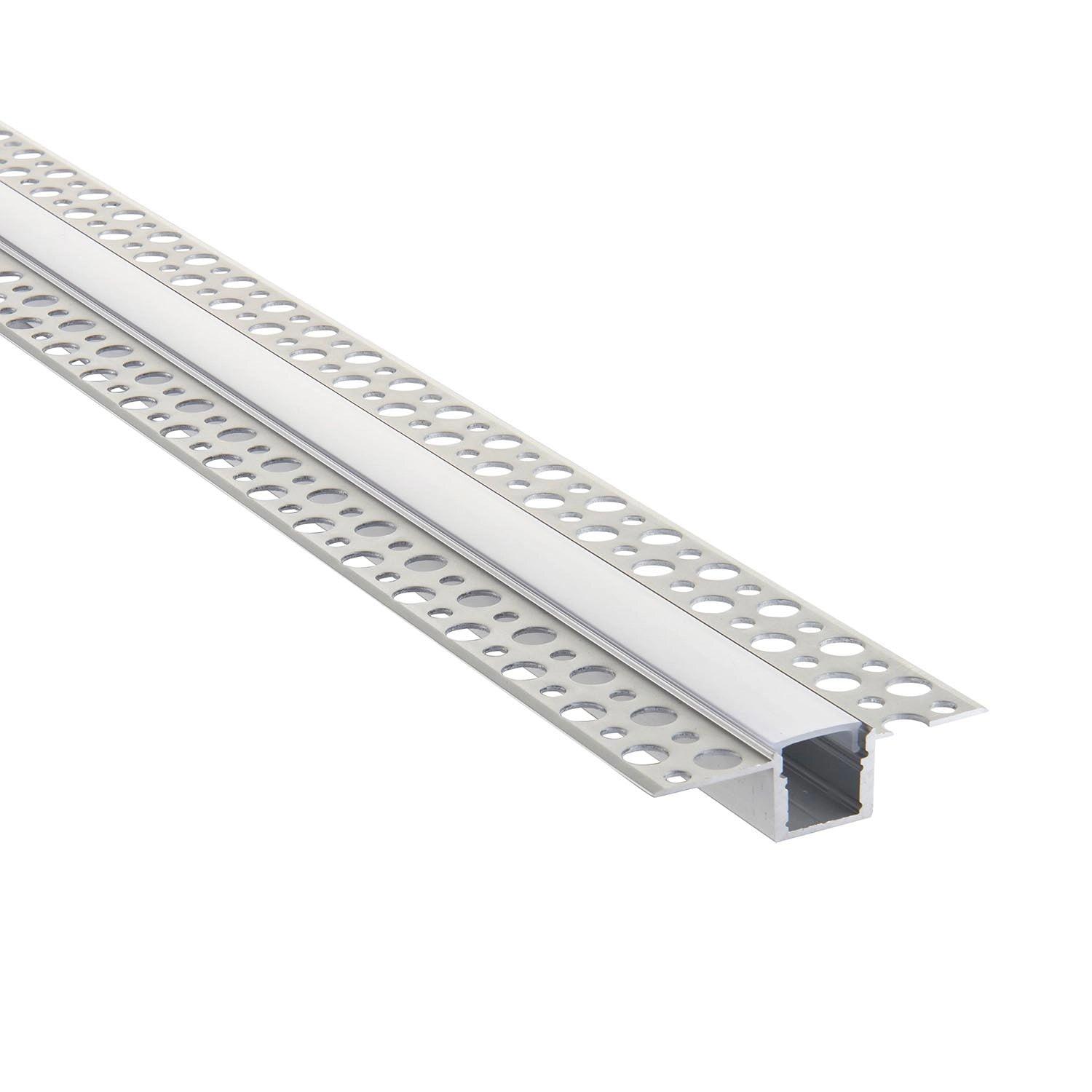
  • Visual benefit: Profiles provide a finished, professional appearance and protect the strip from physical damage during and after installation.

10. Can I use LED strip lights outside in the UK?

  • Yes, with the correct IP rating: IP67 minimum for covered patios, gardens, and raised beds — IP68 for ground-level, water-adjacent, and fully exposed installations.
  • IP65 is not suitable: IP65 does not protect against UK weather conditions including driving rain, frost, sustained damp, and condensation.
  • Driver location: The driver should be mounted in a weatherproof enclosure or located indoors with the cable run routed to the outdoor strip.

11. What causes LED strip lights to flicker?

  • Leading-edge dimmer: The most common cause — replace with a trailing-edge dimmer (approximately £15) for immediate improvement.
  • Incompatible driver: Not all drivers are compatible with all dimmers — check the driver's compatibility list or contact our technical team.
  • Dimmable driver on RGBW strip: RGBW and RGB strip must use a non-dimmable driver with a separate controller — dimmable drivers cause flicker and colour shift on colour-changing strip.
  • Overloaded driver: Running a driver at or above its rated capacity causes thermal protection to cycle, producing intermittent flickering.

12. How do I choose between 24V and 48V LED strip?

  • 24V: Best for most residential installations with runs under 10 metres — widest product selection, most driver options, and the established standard for kitchens and bathrooms.
  • 48V: Best for commercial and long-run residential installations exceeding 10 metres — voltage drop occurs at half the rate of 24V, allowing single-feed runs up to 30 metres and dual-feed up to 50 metres.
  • Cost consideration: 48V strip is typically comparable in price per metre to 24V, but the reduced cable and connector requirements often make the total installation cost lower for long runs.

13. What colour temperature is best for kitchens?

  • 3000K warm white: The most popular choice for kitchen ambient and under-cabinet lighting — warm but clear enough for food preparation.
  • 4000K natural white: Preferred by professional kitchens and homeowners who want maximum colour accuracy on worktops without the yellow bias of warm white.
  • Avoid cool white (5000K+): Too clinical for residential kitchens — creates a harsh, unwelcoming atmosphere that is at odds with the kitchen as a social space.

14. Does ATOM LED offer free delivery on LED strip lights?

  • Free UK delivery: All ATOM LED orders ship free within the UK, with typical delivery in 1–3 working days from our Telford warehouse.
  • UK stock: Every product listed on atomled.co.uk is held in stock at our Telford, Shropshire facility — we do not dropship from overseas suppliers.
  • 5-year warranty: All COB DC voltage strip lights carry a 5-year warranty, with a 7-year warranty on the upcoming premium product line.

15. Can I use LED strip behind a TV?

  • Yes — bias lighting reduces eye strain: A strip of warm white (2700K–3000K) mounted behind the TV at low brightness reduces the contrast between the bright screen and the dark wall, which reduces eye fatigue during extended viewing.
  • Recommended specification: Low-wattage COB strip (5W/m–8W/m) in IP20 rating, powered by a small 24V driver tucked behind the TV unit.

16. What accessories do I need for LED strip installation?

  • Connectors: Solderless push-fit connectors for quick joins, or solder and heat-shrink for permanent, low-resistance connections.
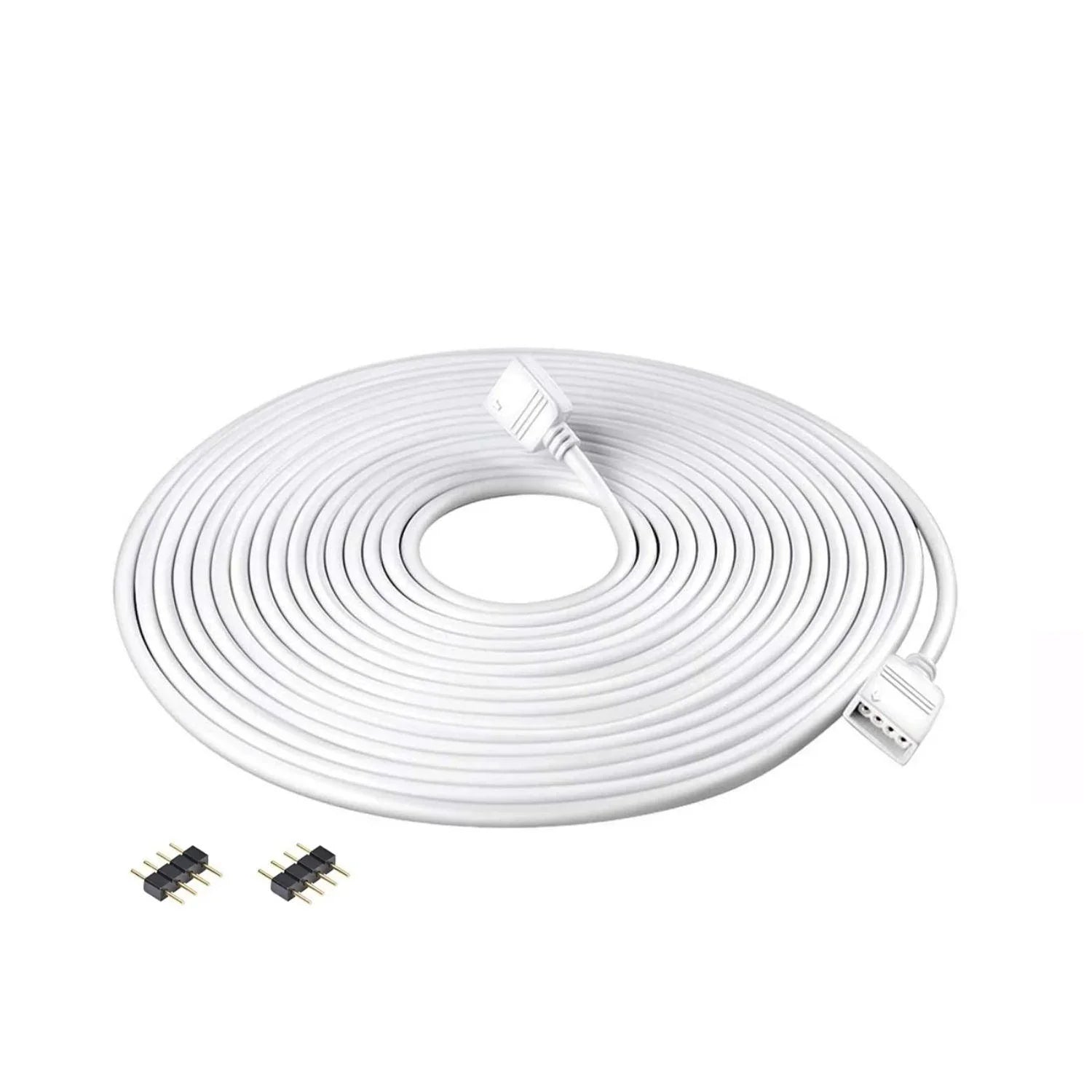
  • Extension wire: Matching gauge and conductor count for your strip type — 2-core for single colour, 5-core for RGBW.
  • Mounting clips and brackets: For securing strip or profiles to surfaces without relying solely on adhesive.
  • Browse the full range: See LED strip accessories for connectors, clips, wire, and installation tools.

Why do UK professionals choose ATOM LED for strip lighting?

UK electricians, interior designers, and commercial specifiers choose ATOM LED because we combine technical depth with practical reliability — CRI90+ on every COB product, FreeCut technology across the range, run lengths up to 50 metres on 48V dual-feed, and a 5-year warranty backed by a Telford-based technical team that answers the phone Monday to Friday. We hold UK stock, ship free, and do not dropship from overseas.

  • FreeCut technology: Cut at any point along the strip without voiding warranty — no more measuring to fixed cut marks and wasting material on returns and off-cuts.
  • CRI90+ on all COB strip: Every COB product in the ATOM LED range meets CRI90+ for accurate colour rendering in kitchens, retail, hospitality, and architectural applications.
  • Extended run lengths: 20 metres single-feed on 24V, 30 metres single-feed on 48V, and 50 metres dual-feed on 48V — reducing power injection points and simplifying long commercial runs.
  • 5-year warranty: All COB DC voltage strip lights are covered by a 5-year warranty, with a 7-year warranty on the upcoming premium line — one of the longest guarantees in the UK LED strip market.
  • UK stock from Telford: Every product ships from our Shropshire warehouse within 1–3 working days, with free delivery across the UK — we do not dropship from China or Europe.
  • Technical team: Real people who have specified and installed LED strip answer the phone on 01952 370028, Monday to Friday, 9am to 5pm — not a call centre reading scripts.

Whether you are an electrician specifying COB strip for a kitchen refit, a designer planning a commercial fit-out, or a homeowner researching your first LED strip project, ATOM LED provides the product depth, technical support, and UK-based service to get your installation right first time.

Ready to buy LED strip lights? Browse the COB LED strip range, call us on 01952 370028, or email operations@atomled.co.uk for technical advice and project specification support. Free UK delivery on every order.


Related Collections

Last reviewed: March 2026 — ATOM LED technical team, Telford, Shropshire. Specifications current as of 2026.

🏭 UK LED specialist, Telford, Shropshire  ·  ☎️ 01952 370028  ·  🚚 Free UK delivery

101 products

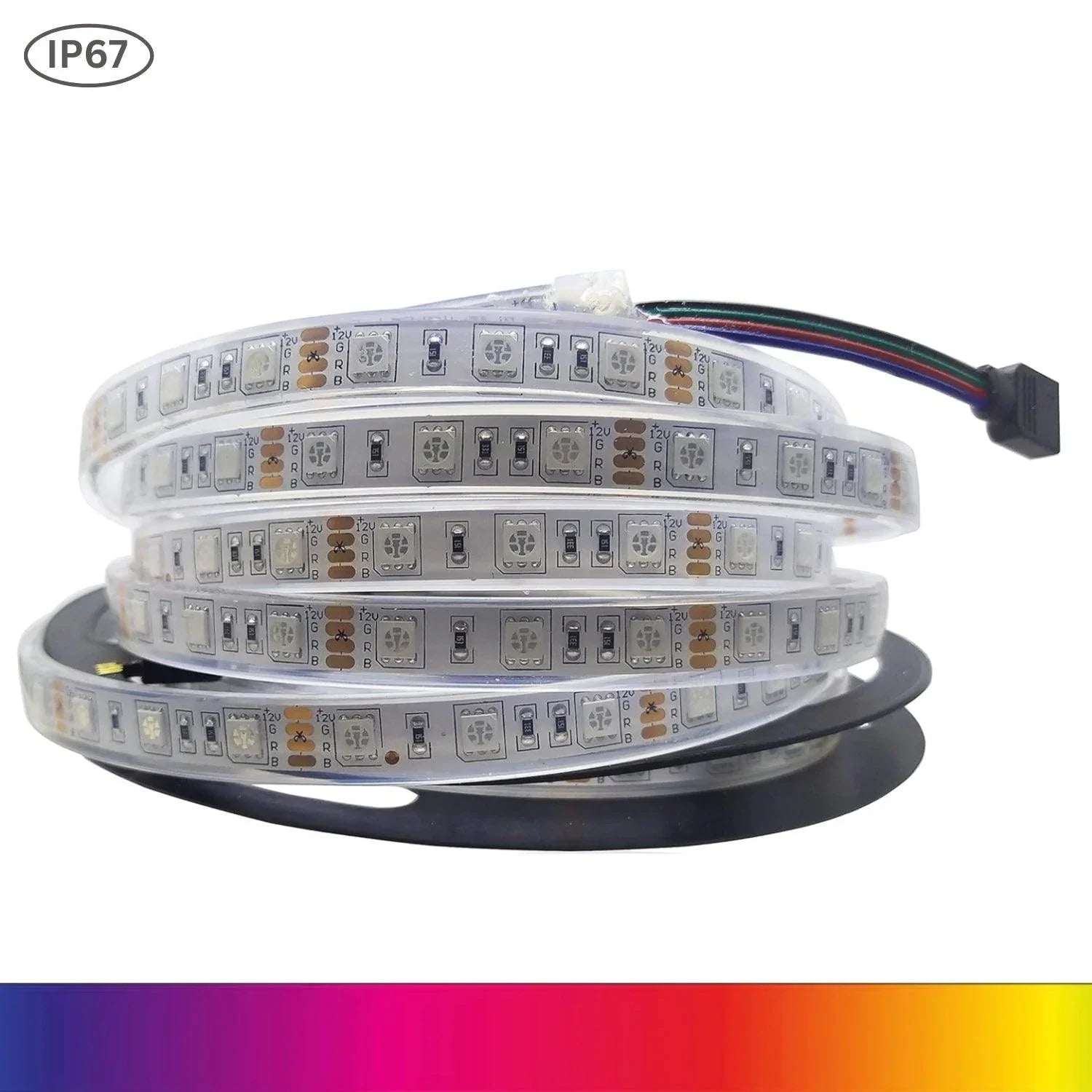
RGB LED Strip 12V 5050 IP67 Waterproof 60LED/m 5 Metre
RGB LED Strip 12V 5050 IP67 Waterproof 60LED/m 5 Metre

Regular price £35.85
Sale price £35.85 Regular price
RGB LED Strip DC 24V 10m One Length 5050 IP20 Non-Waterproof 60LED/m - ATOM LED
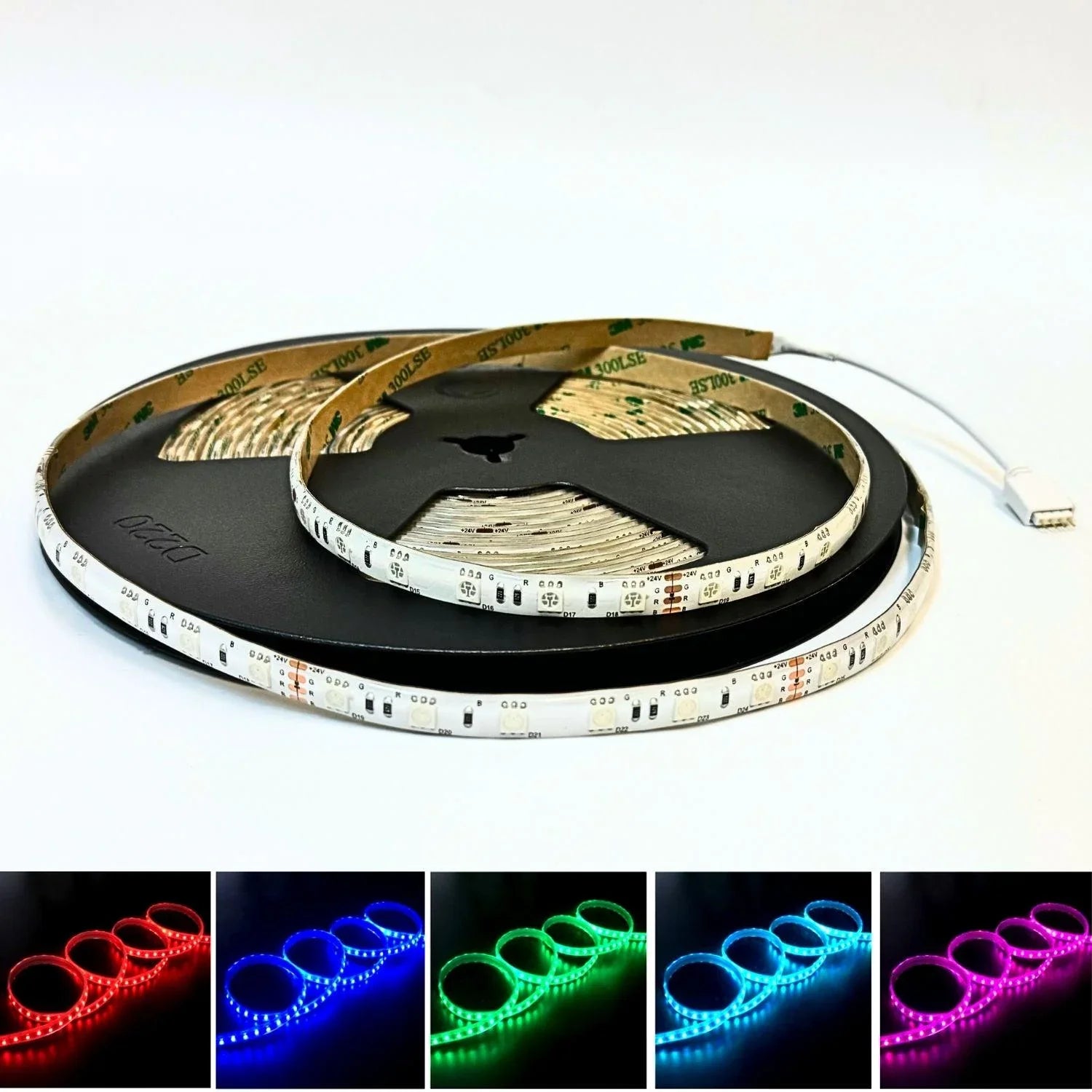
RGB LED Strip DC 24V 10m One Length 5050 IP20 Non-Waterproof 60LED/m

  • RGB Strip 24V
  • 10m Continuous run
  • 10cm (100mm) Cut
  • 10mm Wide
  • 14 W/m
  • IP20 Non-Waterproof
Regular price £47.85
Sale price £47.85 Regular price
RGB LED Strip DC 24V 10m One Length 5050 IP65 Waterproof 60LED/m - ATOM LED
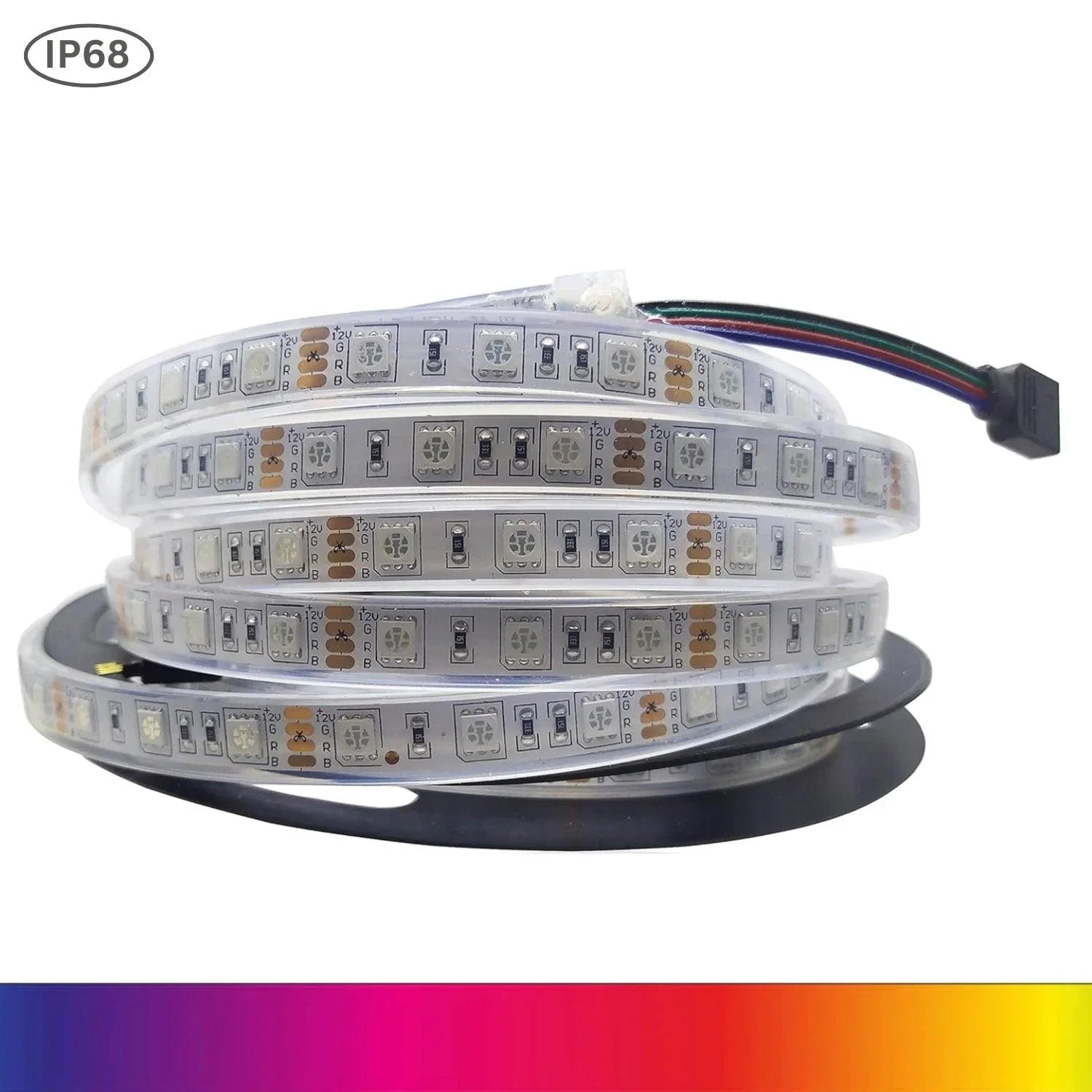
RGB LED Strip DC 24V 10m One Length 5050 IP65 Waterproof 60LED/m

  • RGB Strip 24V
  • 10m Continuous run
  • 10cm (100mm) Cut
  • 10mm Wide
  • 14 W/m
  • IP65 Waterproof
Regular price £68.95
Sale price £68.95 Regular price
rgb led strip 12v 5050 5 metre ip68

RGB LED Strip 12V 5050 IP68 Waterproof 60LED/m 5 Metre
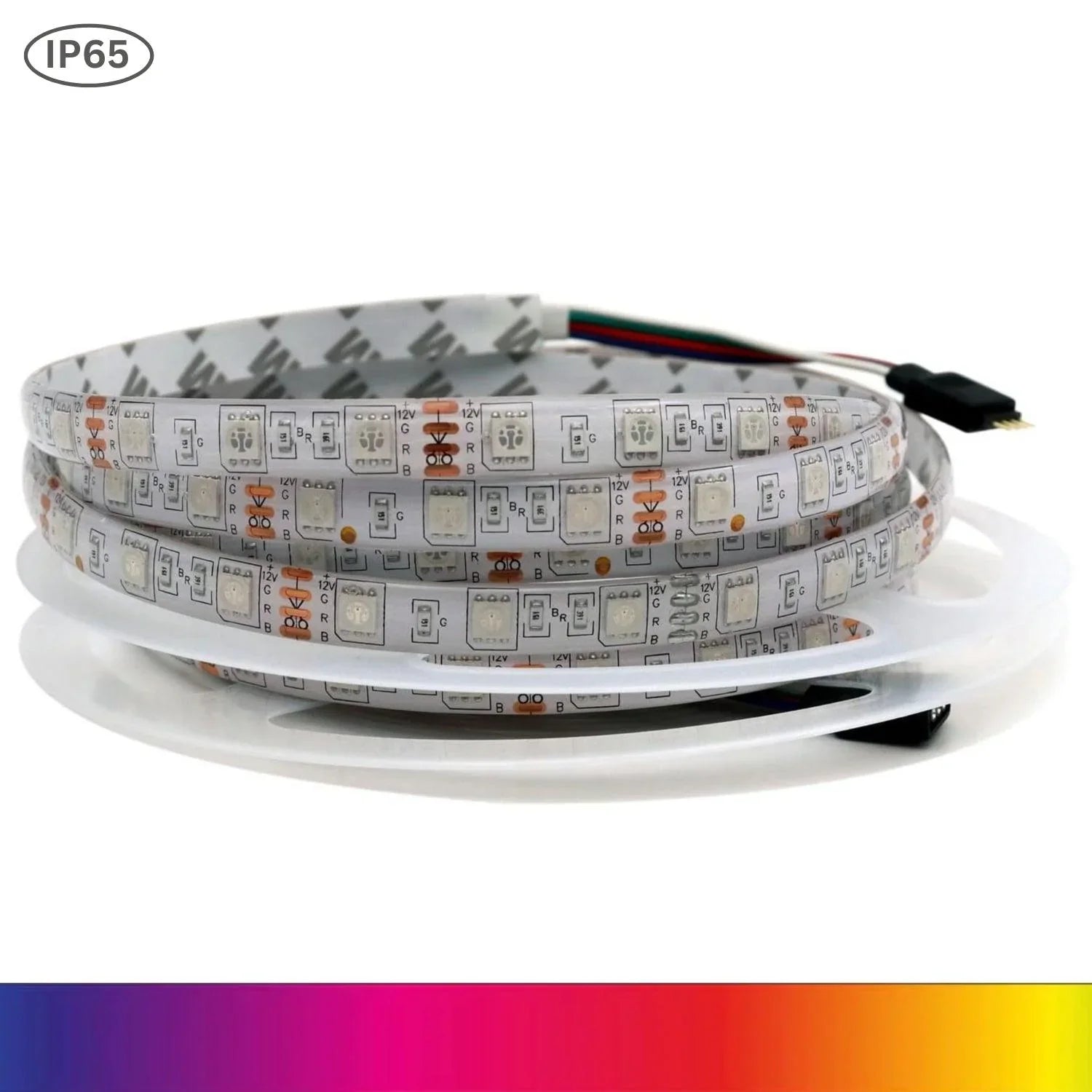
Regular price £43.85
Sale price £43.85 Regular price
RGB LED Strip DC 12V 5050 IP65 Waterproof 60LED/m 5 Metre
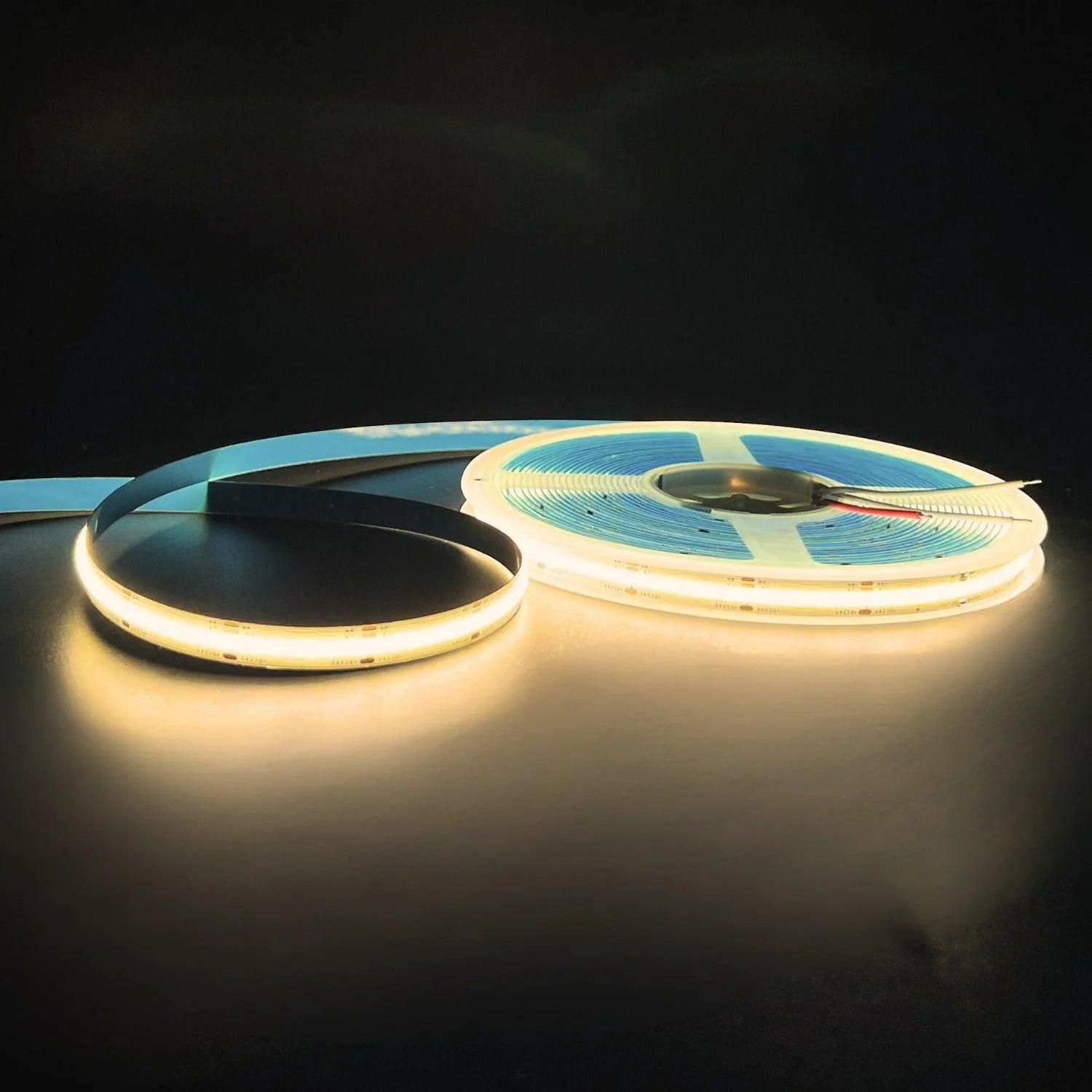
RGB LED Strip DC 12V 5050 IP65 Waterproof 60LED/m 5 Metre

  • 12V RGB Strip
  • 5 Metre Length
  • IP65 Waterproof
  • 5cm Cut
  • 14 Watts/m
  • Width 10mm
Regular price £24.95
Sale price £24.95 Regular price
Tricolour CCT Seamless COB LED Strip 24V 780 LEDs/m IP20 Waterproof WW+CW 10 Metre - ATOM LED

Tricolour CCT COB LED Strip 24V 8mm 624 LEDs/m IP20
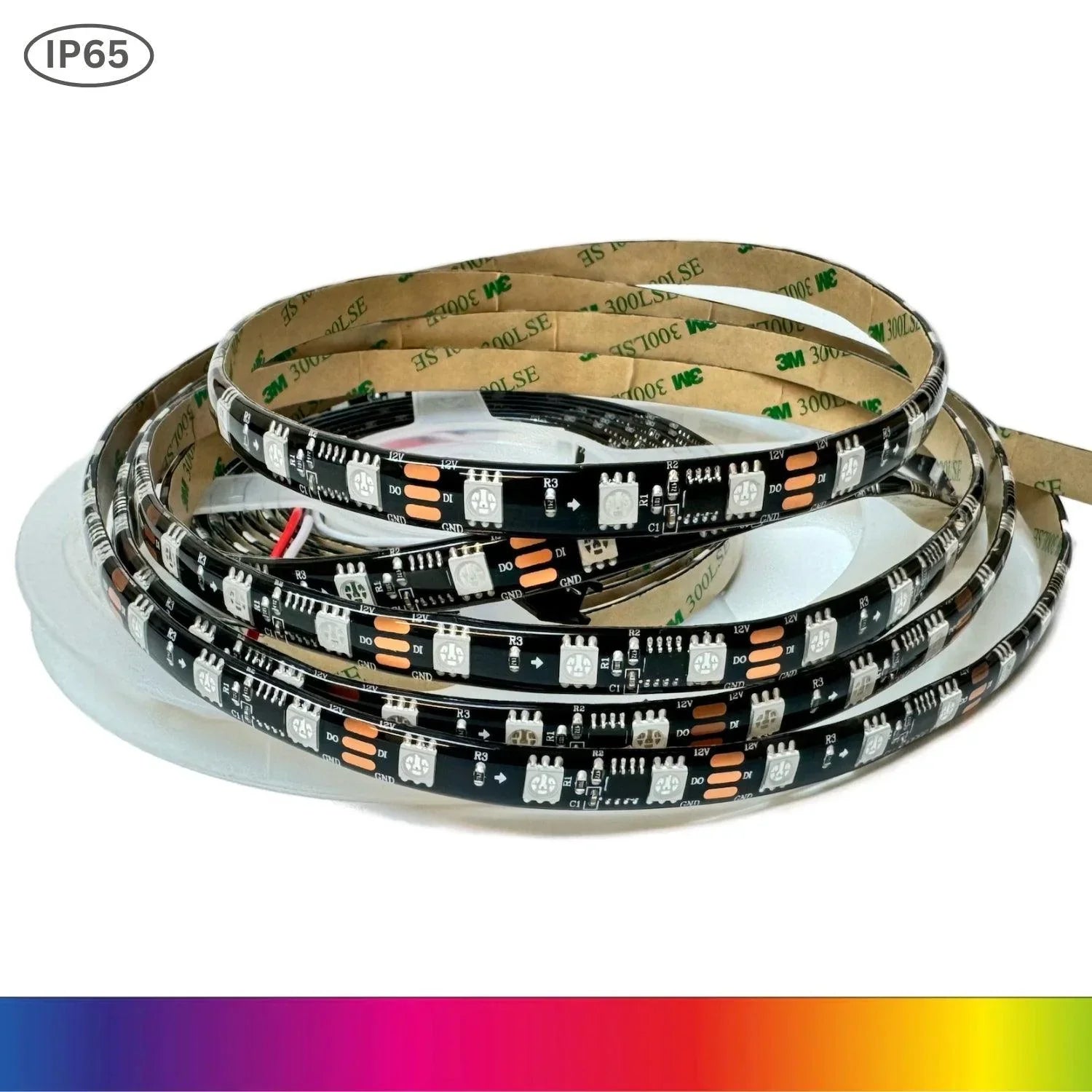
  • CCT COB Strip
  • 2700K-6000K
  • IP20 non waterproof
  • 24V
  • 1.93cm (19.3mm) Cut
  • 624 LEDs/m
Regular price From £8.95
Sale price From £8.95 Regular price
View Product
addressable rgb led strip 12v digital pixel rgb strip ws2811

Digital Pixel RGB LED Strip 12V WS2811 Addressable 5050 60LED/m IP65 5 Metre
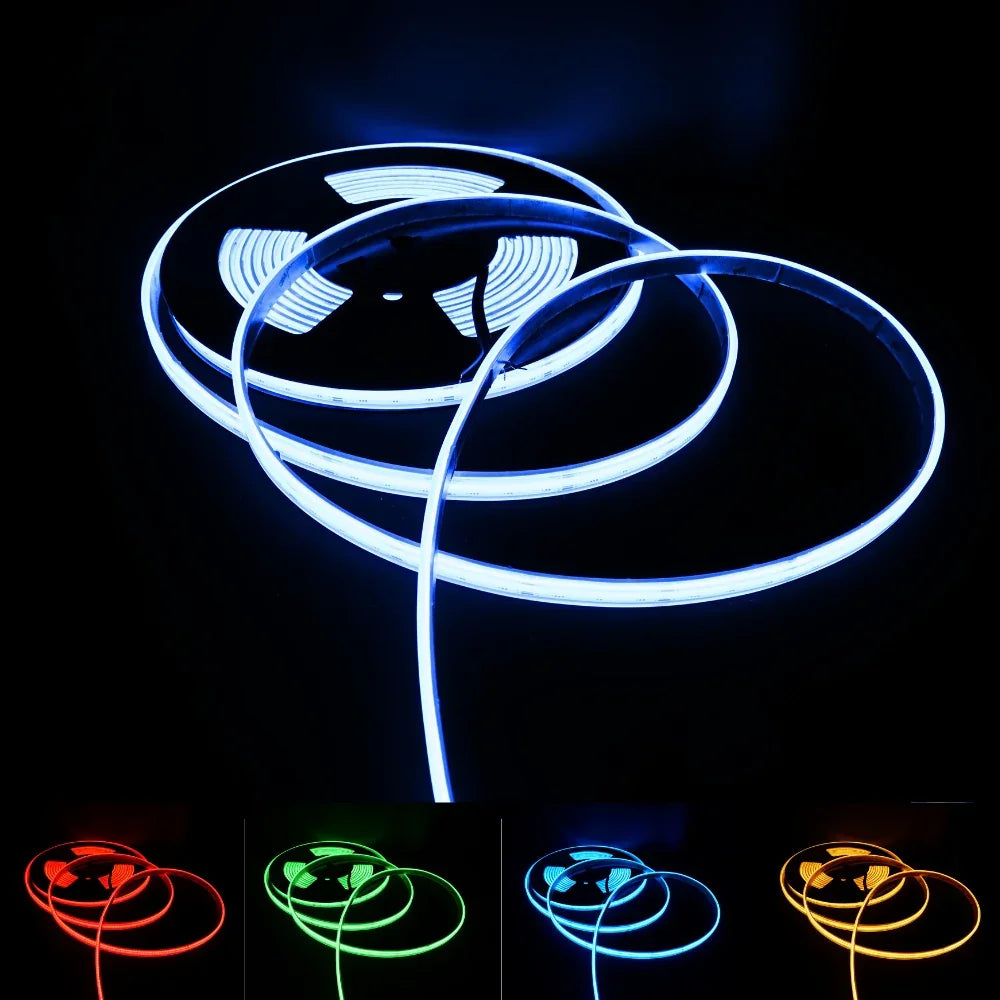
  • Digital RGB Strip 12V
  • WS2811
  • 5cm (50mm) Cut
  • 10mm Wide
  • 14 W/m
  • IP65 Waterproof
Regular price £34.95
Sale price £34.95 Regular price
RGB COB LED Strip 24V IP20 non-Waterproof 840 LEDs/m 10mm wide
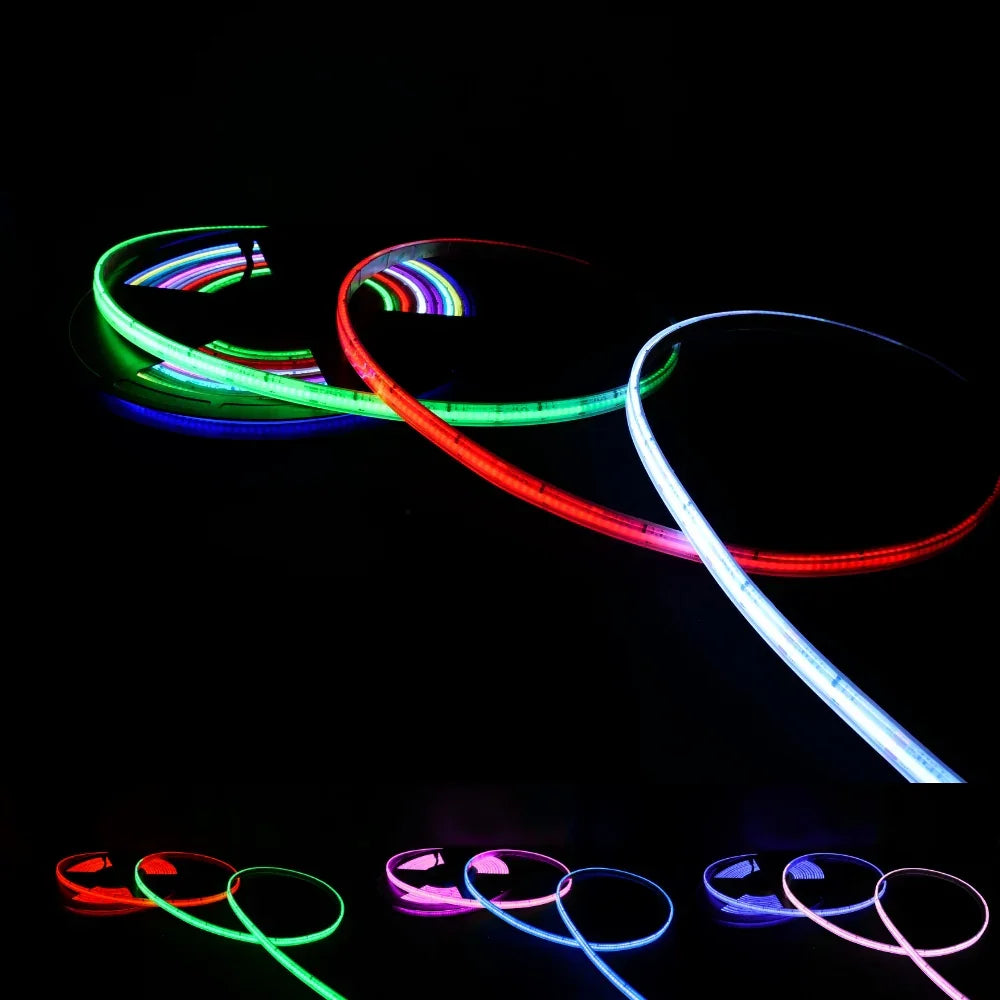
RGB COB LED Strip 24V IP20 non-Waterproof 840 LEDs/m 10mm wide

  • RGB COB Strip 24V
  • 5cm (50mm) Cut
  • 10mm Wide
  • 18 W/m
  • 890 Lumens/m
  • IP20 Non-Waterproof
Regular price From £14.95
Sale price From £14.95 Regular price
View Product
Digital Pixel RGB COB Strip 24V IP20 720 LEDs/m WS2811 10mm wide

Digital Pixel SPI RGB COB Strip 24V IP20 720 LEDs/m WS2811 10mm Wide
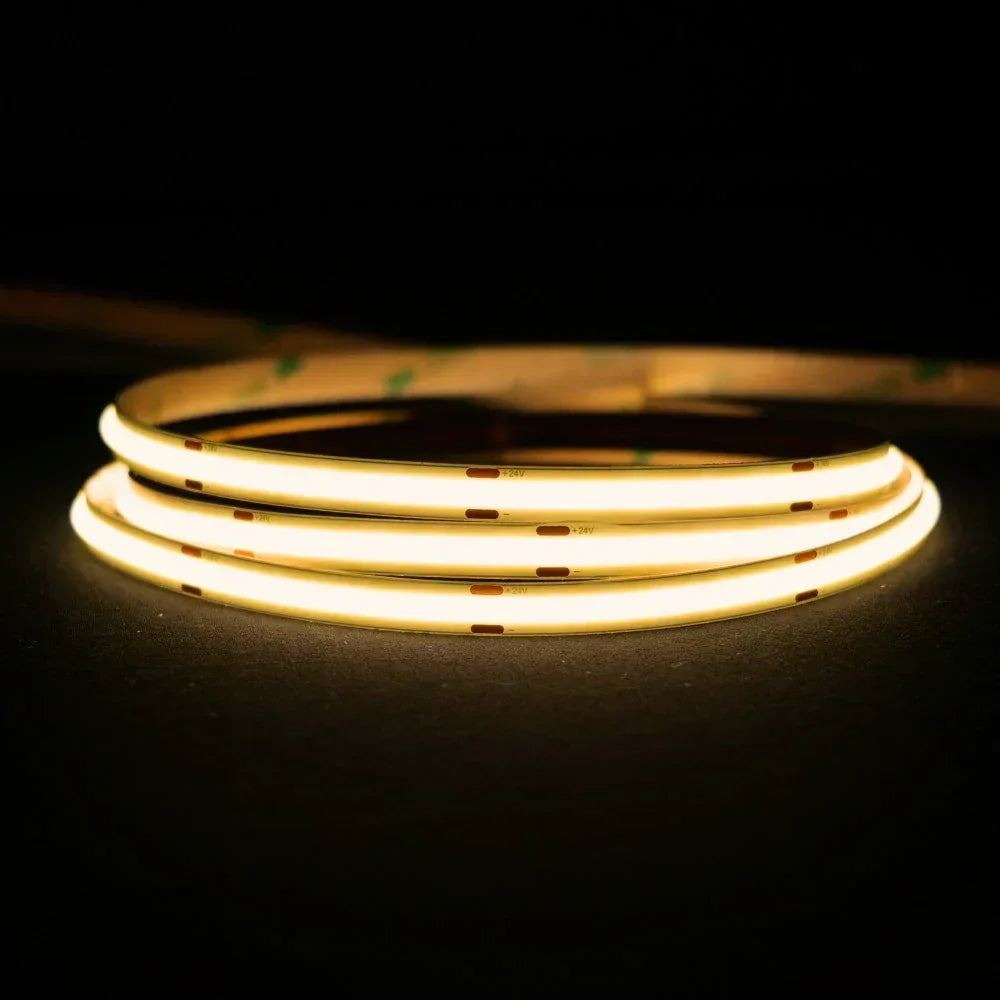
  • Digital RGB COB Strip 24V
  • WS2811
  • 5cm (50mm) Cut
  • 10mm Wide
  • 21 W/m
  • 810 Lumens/m
Regular price From £17.85
Sale price From £17.85 Regular price
View Product
Extra Long Warm White 3000K COB LED Strip 48V 480LEDs/m IP20 30 metre

COB LED Strip Warm White 3000K 24V 352 LEDs/m IP20 5 Metre
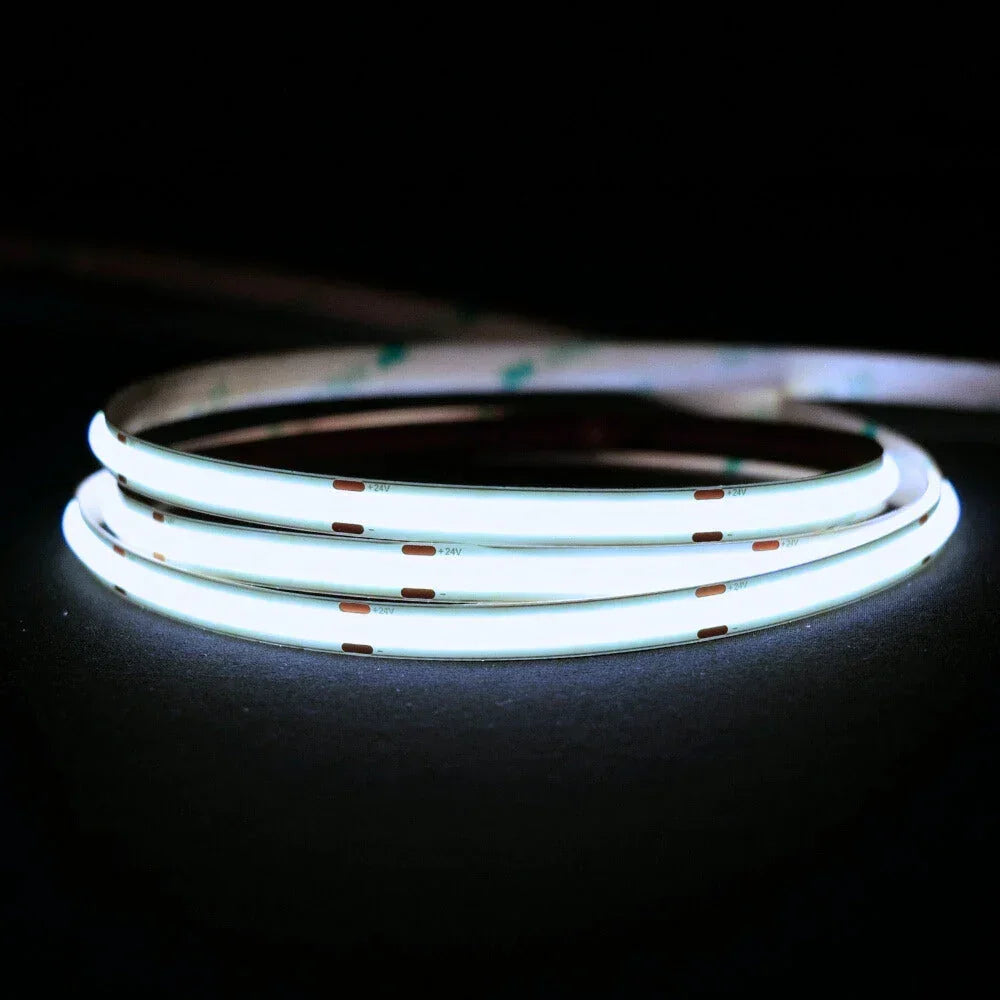
  • 24V 5 Metre Roll
  • 5cm Cut
  • 8mm Wide
  • 11 W/m
  • 810 Lumens/m
  • IP20 Non-Waterproof
Regular price £39.85
Sale price £39.85 Regular price
COB LED Strip Cool White 6000K 24V 352 LEDs/m IP20 5 Metre
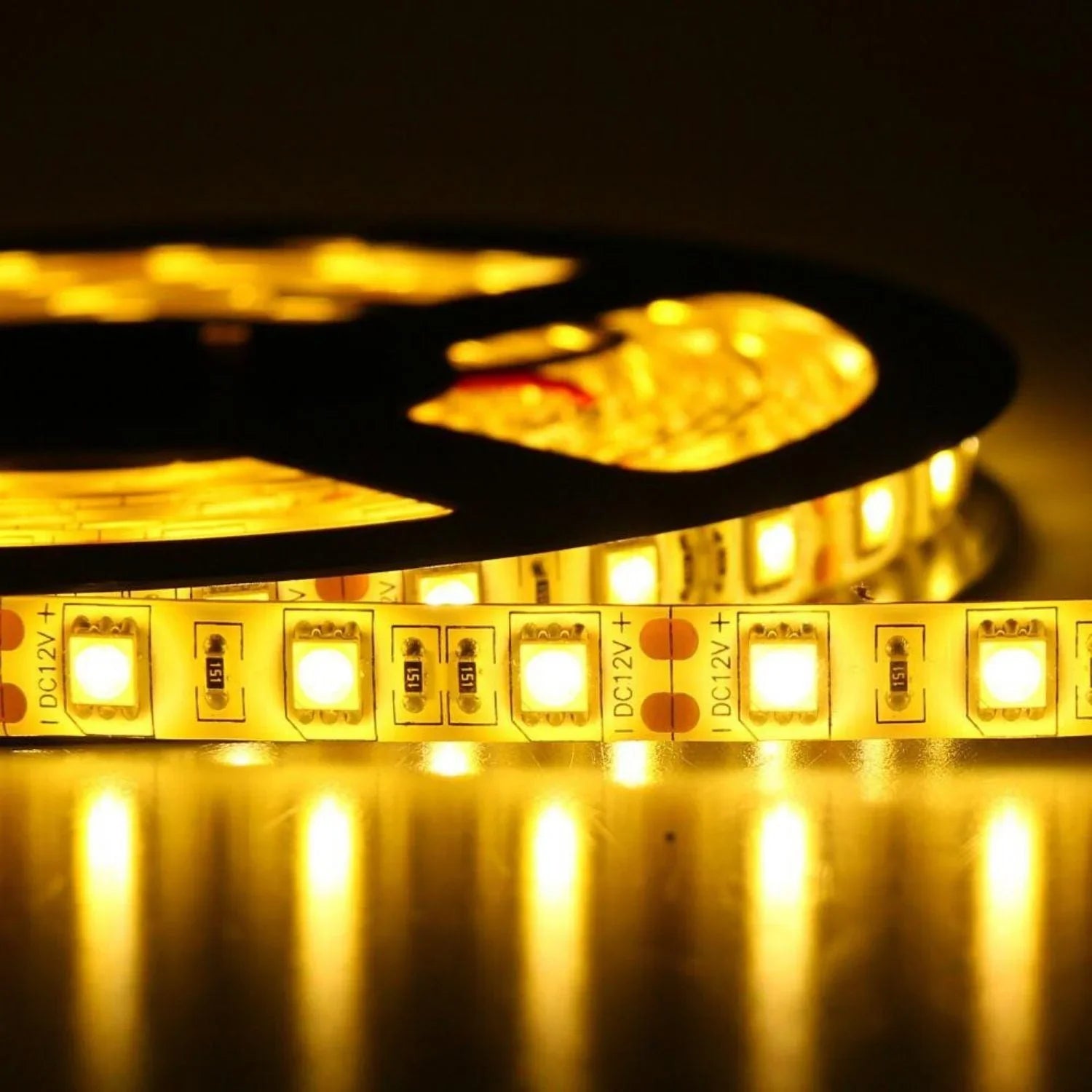
COB LED Strip Cool White 6000K 24V 352 LEDs/m IP20 5 Metre

  • 24V 5 Metre Roll
  • 5cm Cut
  • 8mm Wide
  • 11 W/m
  • 810 Lumens/m
  • IP20 Non-Waterproof
Regular price £39.85
Sale price £39.85 Regular price
SMD5050 Yellow LED Strip 12V IP65 Waterproof 60LED/m 5 metre - UK LED Lights

Yellow LED Strip 12V 5050 IP65 Waterproof 60LED/m 5 metre
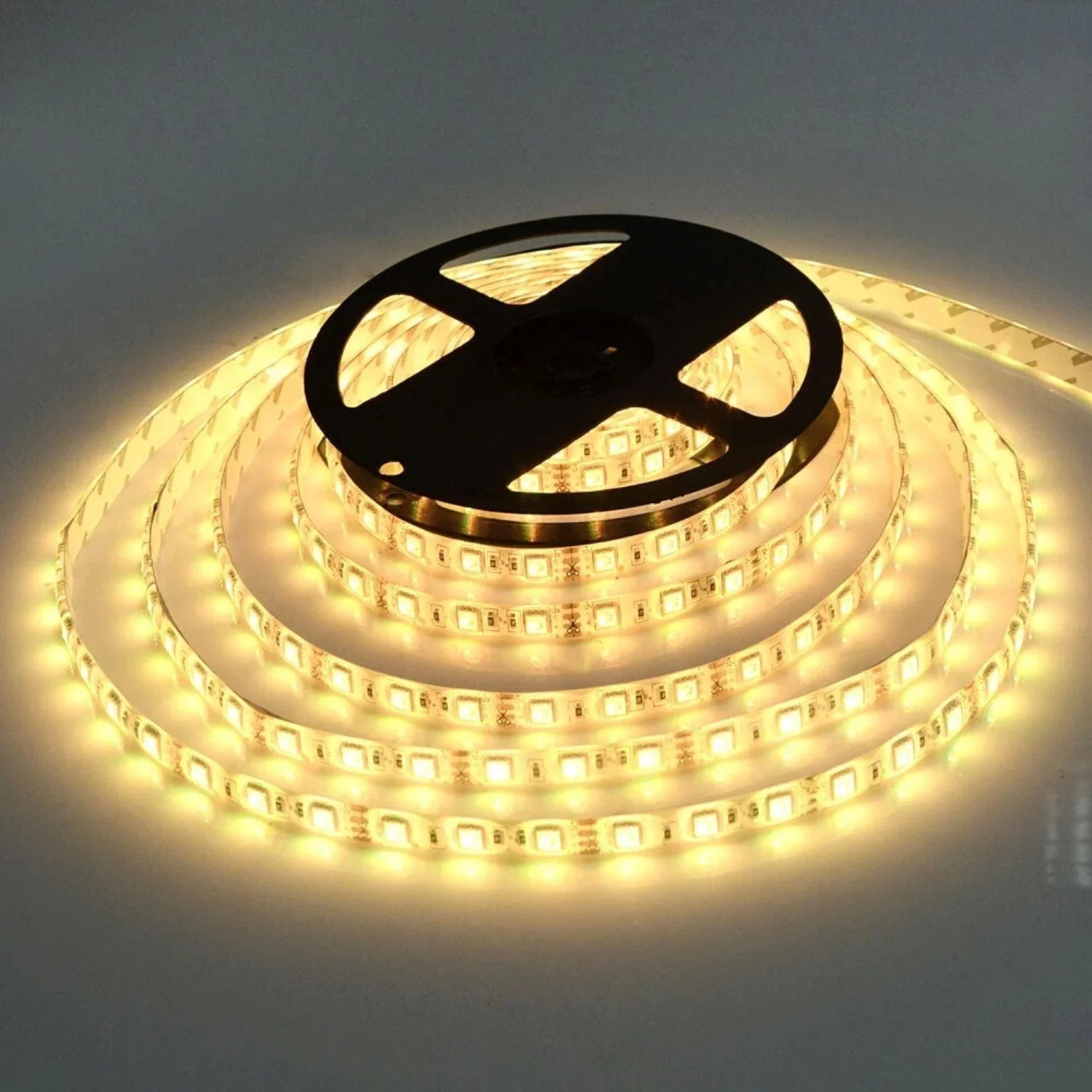
  • Yellow
  • 12V LED Strip
  • 5050 SMD
  • IP65 Waterproof
  • 10mm Wide
  • 9 Watts/m
Regular price £19.85
Sale price £19.85 Regular price
SMD5050 Warm White LED Strip 12V IP65 Waterproof 60LED/m 5 metre - UK LED Lights

Warm White LED Strip 12V 5050 IP65 Waterproof 60LED/m 5 metre
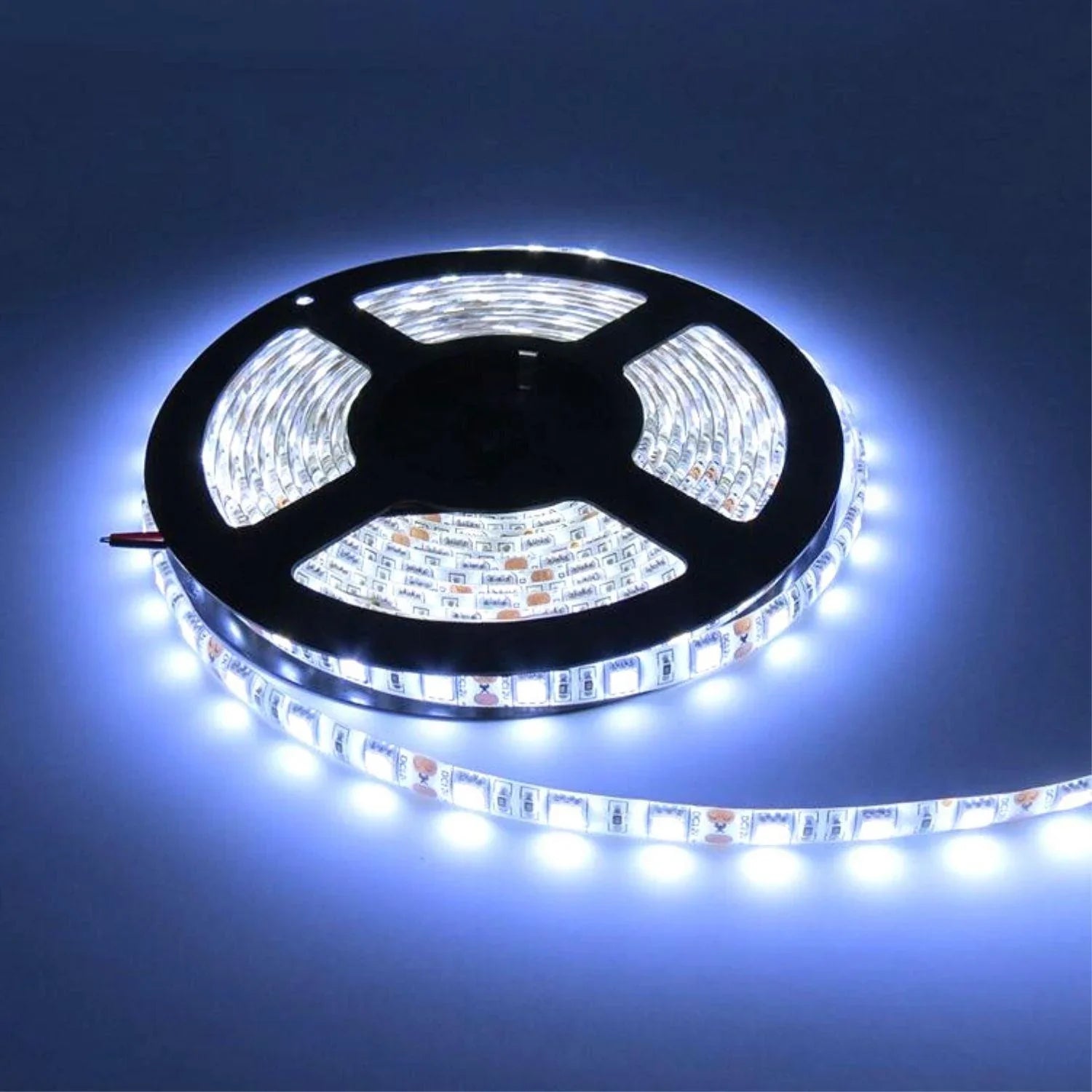
  • Warm White 3000K
  • 12V LED Strip
  • 5050 SMD
  • IP65 Waterproof
  • 10mm Wide
  • 9 Watts/m
Regular price £19.85
Sale price £19.85 Regular price
SMD5050 Cool White LED Strip 12V IP65 Waterproof 60LED/m 5 metre - UK LED Lights

Cool White LED Strip 12V 5050 IP65 Waterproof 60LED/m 5 metre
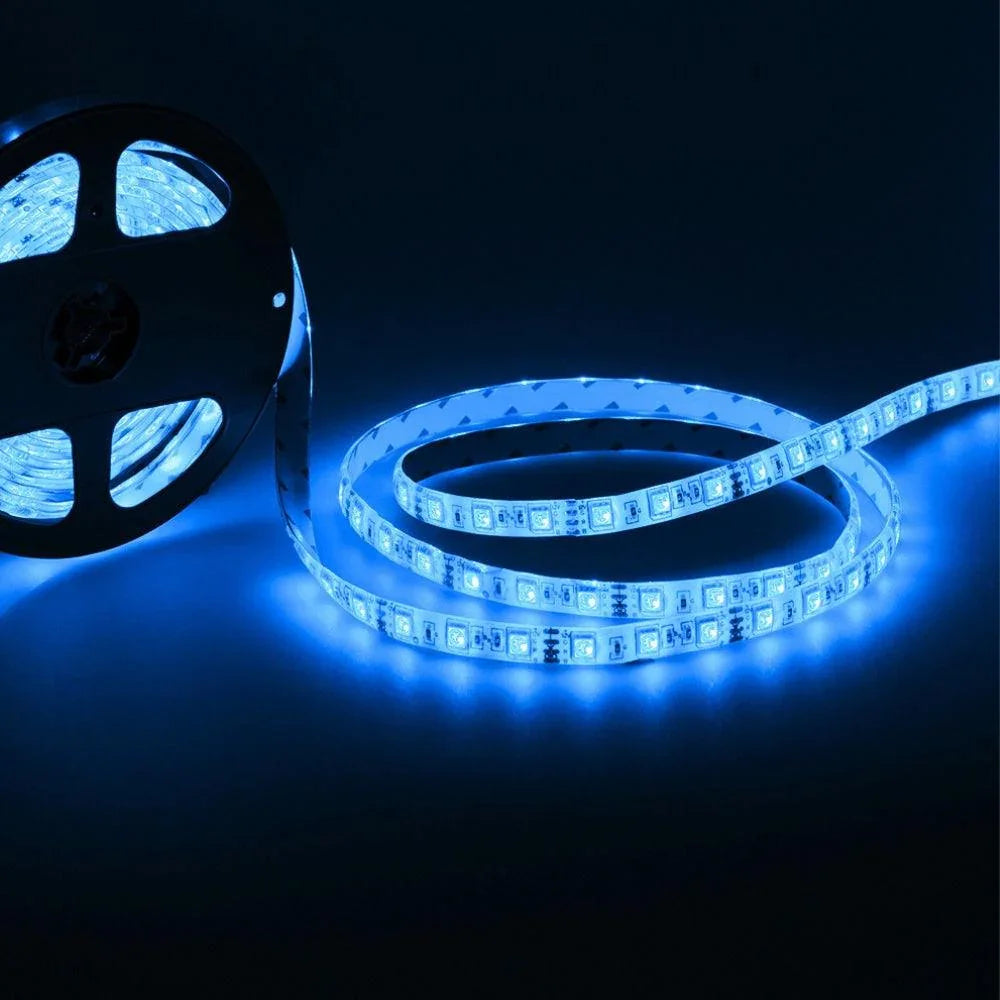
  • Cool White 6000K
  • 12V LED Strip
  • 5050 SMD
  • IP65 Waterproof
  • 10mm Wide
  • 9 Watts/m
Regular price £19.85
Sale price £19.85 Regular price
Blue LED Strip 12V 5050 IP65 Waterproof 60LED/m 5 metre

Blue LED Strip 12V 5050 IP65 Waterproof 60LED/m 5 metre
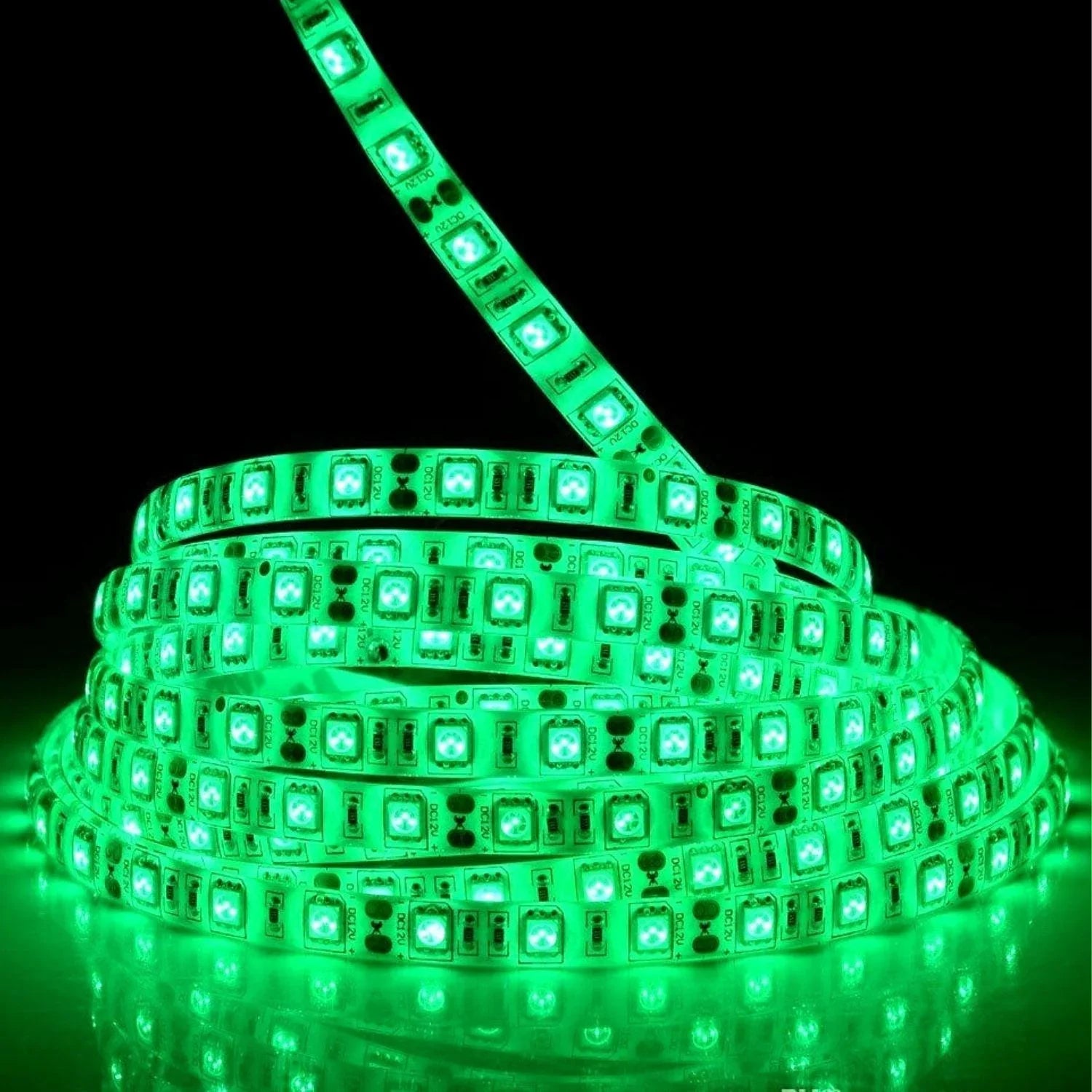
  • Blue
  • 12V LED Strip
  • 5050 SMD
  • IP65 Waterproof
  • 10mm Wide
  • 9 Watts/m
Regular price £19.85
Sale price £19.85 Regular price
SMD5050 Green LED Strip 12V IP65 Waterproof 60LED/m 5 metre - UK LED Lights

Green LED Strip 12V 5050 IP65 Waterproof 60LED/m 5 metre
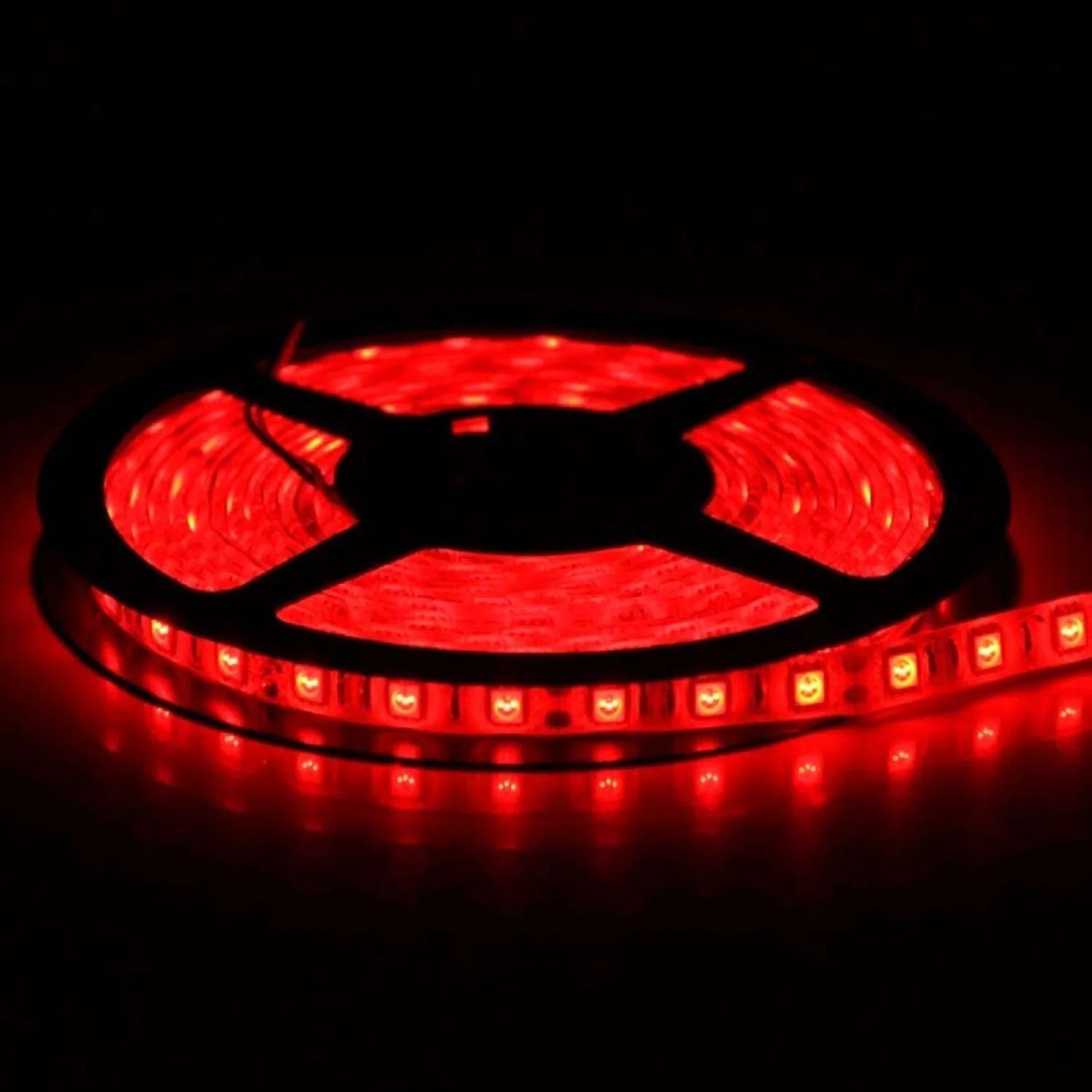
  • Green LED Strip
  • 12V LED Strip
  • 5050 SMD
  • IP65 Waterproof
  • 10mm Wide
  • 9 Watts/m
Regular price £19.85
Sale price £19.85 Regular price
SMD5050 Red LED Strip 12V IP65 Waterproof 60LED/m 5 metre - UK LED Lights

Red LED Strip 12V 5050 IP65 Waterproof 60LED/m 5 metre
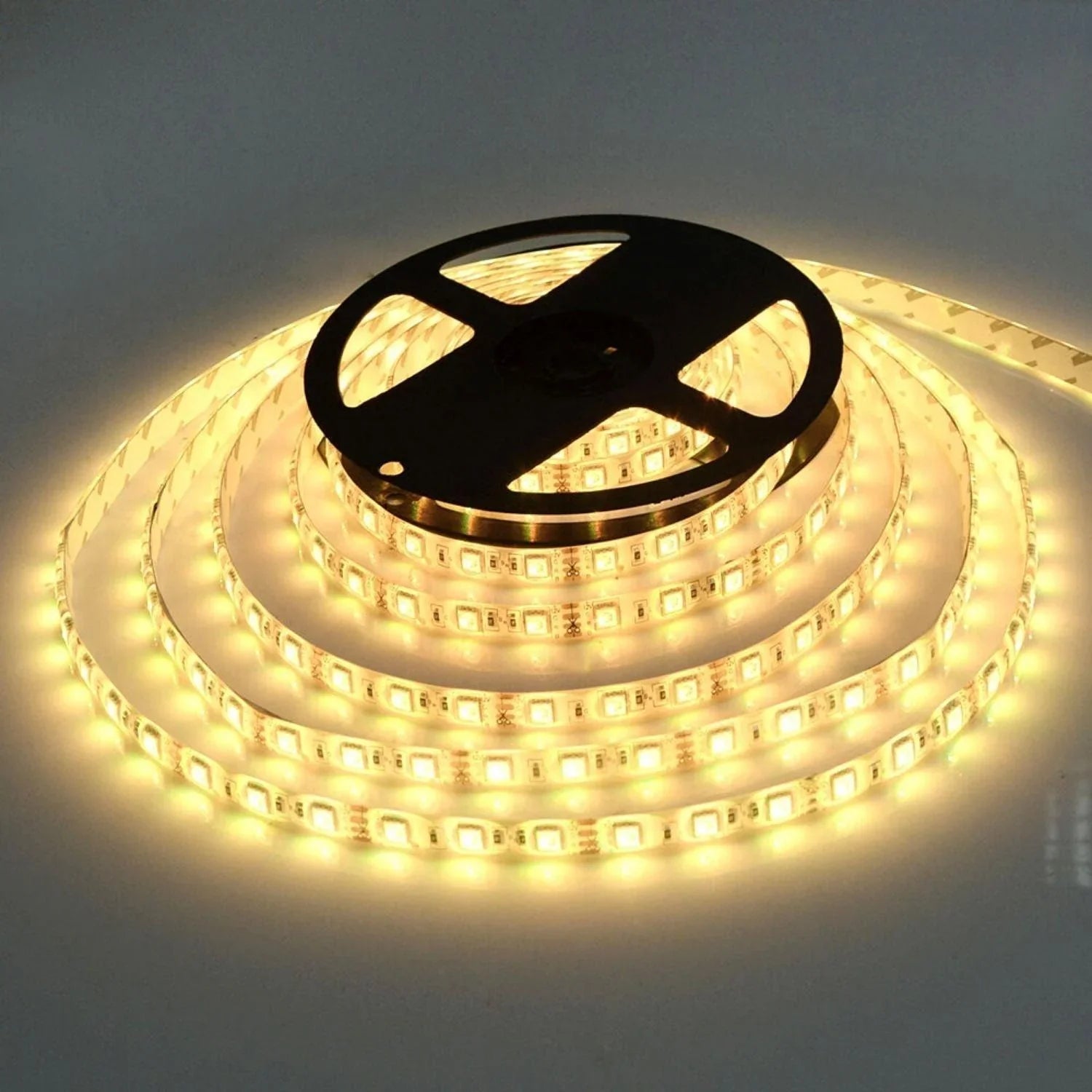
  • Red
  • 12V LED Strip
  • 5050 SMD
  • IP65 Waterproof
  • 10mm Wide
  • 9 Watts/m
Regular price £19.85
Sale price £19.85 Regular price
Warm White LED Strip 12V IP65 Waterproof 60LED/m 5 metre with 3M Adhesive Tape Full Kit - UK LED Lights

Warm White LED Strip 12V IP65 Waterproof 60LED/m 5 metre Full Kit
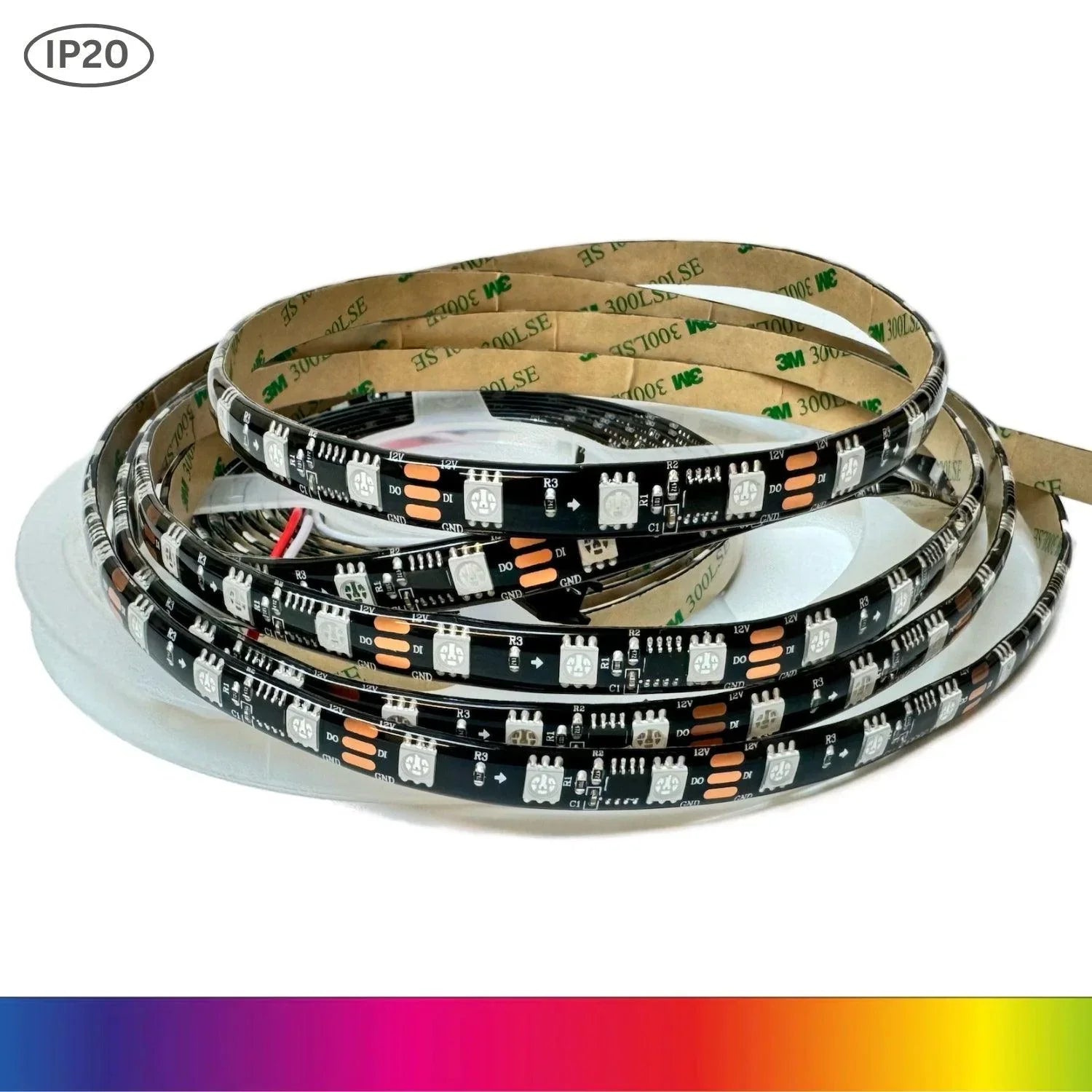
  • Warm White 3000K
  • 12V LED Strip
  • 5050 SMD
  • IP65 Waterproof
  • 10m Wide
  • 6 Watts/m
Regular price £33.54
Sale price £33.54 Regular price
addressable rgb led strip 12v ip65 ws2811 (1).jpg

Digital Pixel RGB LED Strip 12V WS2811 60LED/m IP20 Non-Waterproof 5 Metre
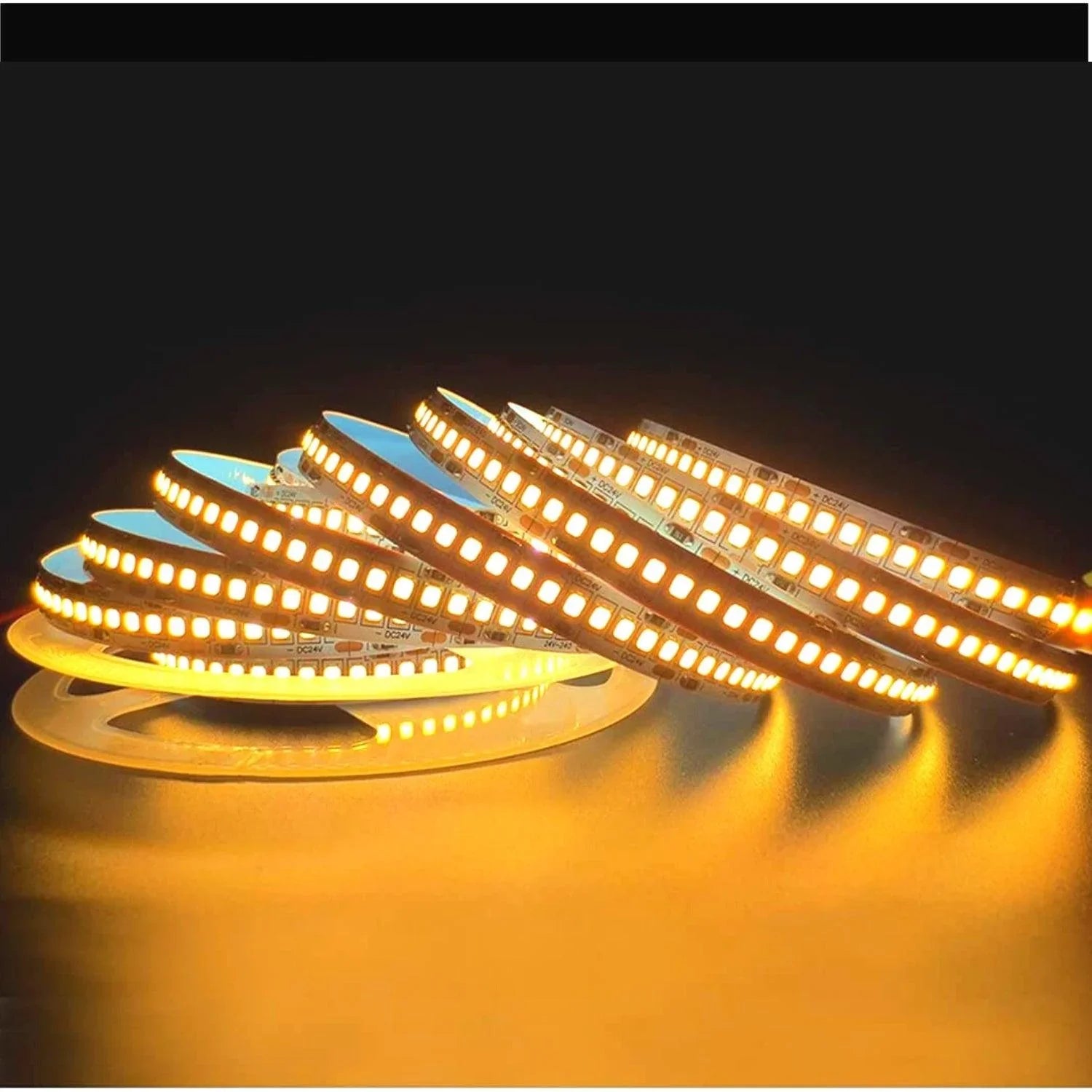
  • Digital RGB Strip 12V
  • WS2811
  • 5cm (50mm) Cut
  • 10mm Wide
  • 14 W/m
  • IP20 Non-Waterproof
Regular price £31.95
Sale price £31.95 Regular price
Warm White LED Strip Light 3000K 12V 240 LEDs/m 1200 LEDs IP20 Waterproof 5 Metre Strip - ATOM LED
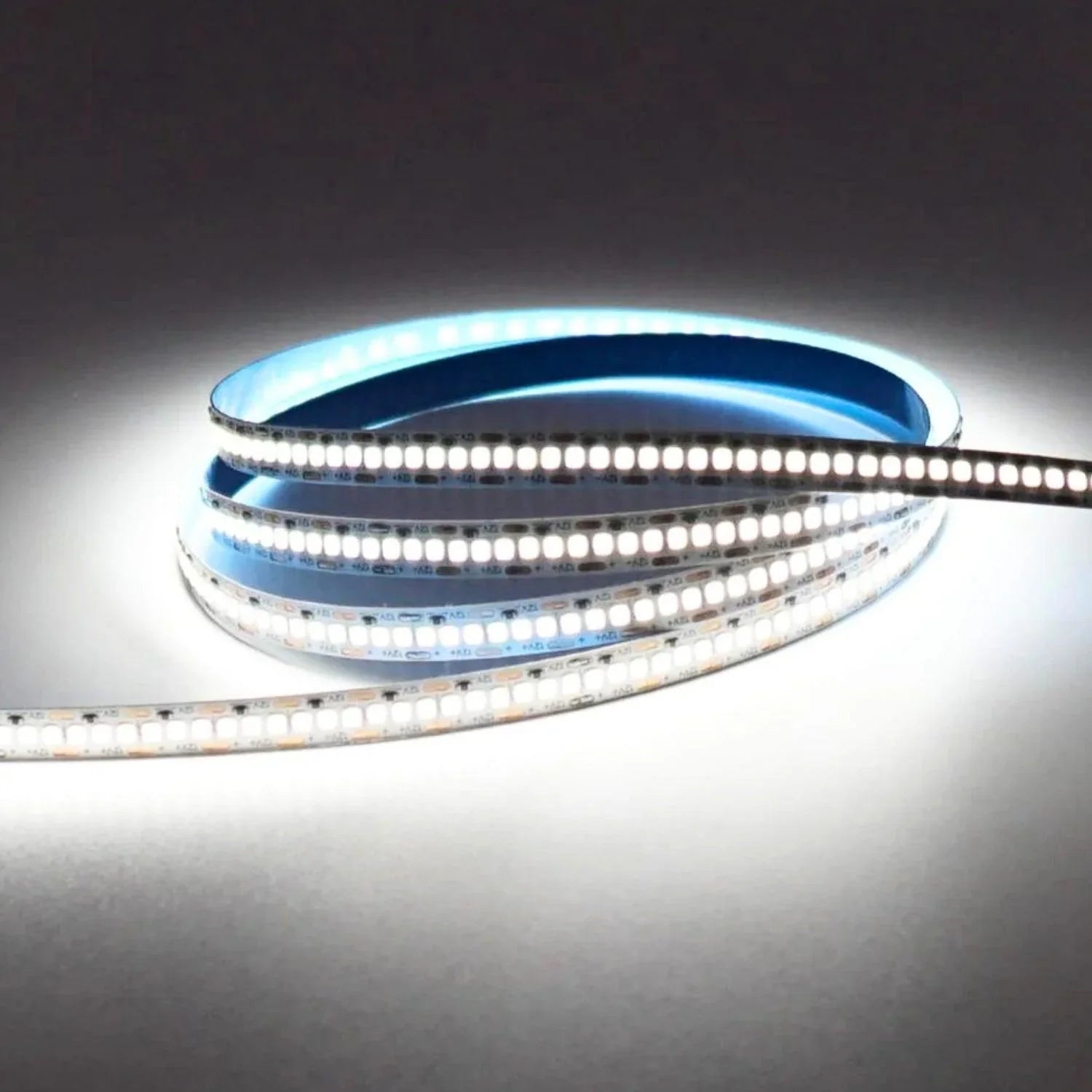
Warm White LED Strip Light 3000K 12V 240 LEDs/m 1200 LEDs IP20 Waterproof 5 Metre Strip
Regular price £48.54
Sale price £48.54 Regular price
Cool White LED Strip Light 6000K 12V 240 LEDs/m 1200 LEDs IP20 Waterproof 5 Metre Strip - ATOM LED

Cool White LED Strip Light 6000K 12V 240 LEDs/m 1200 LEDs IP20 Waterproof 5 Metre Strip

Regular price £48.54
Sale price £48.54 Regular price
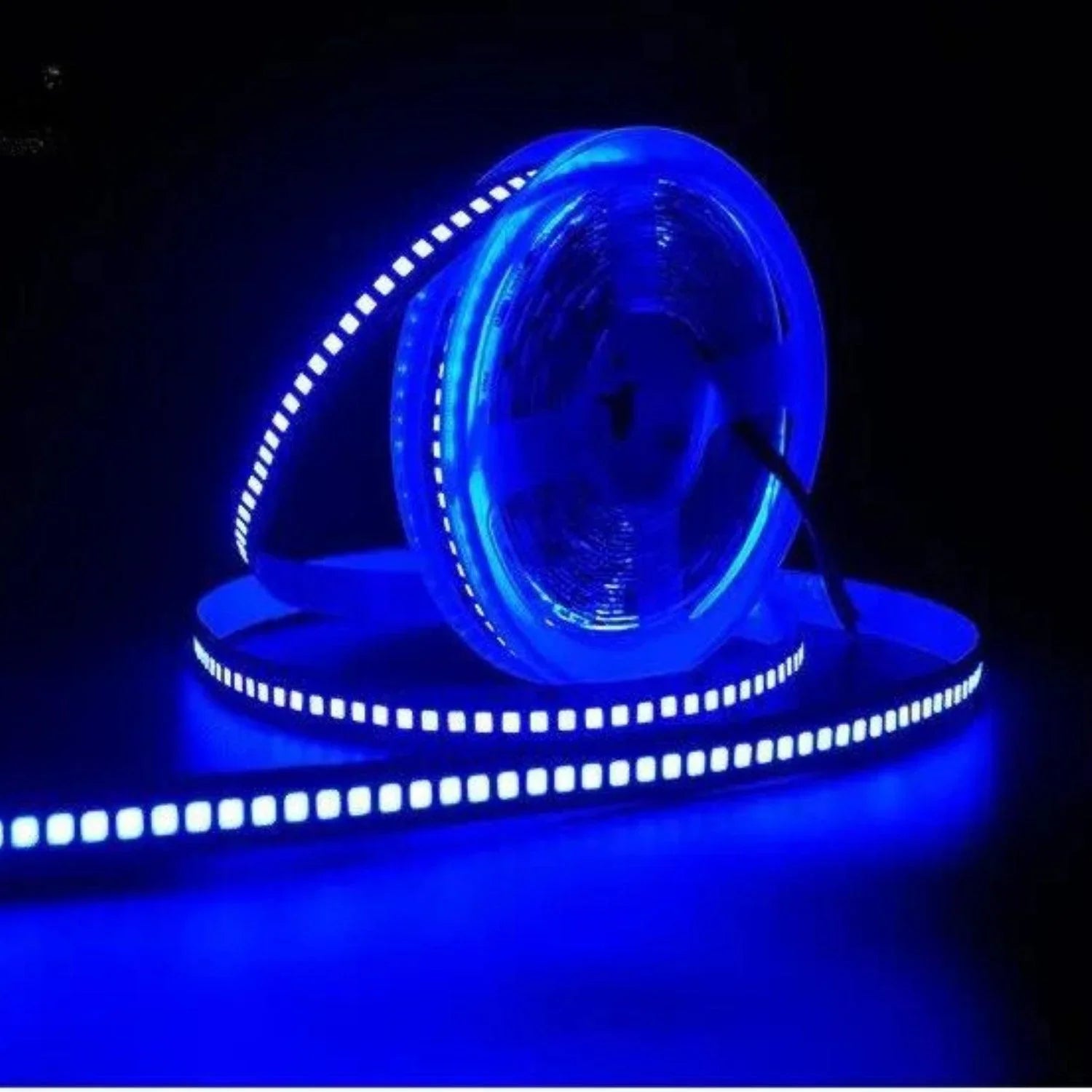
Blue LED Strip Light 12V 240 LEDs/m 1200 LEDs IP20 Non Waterproof 5 Metre Strip - ATOM LED
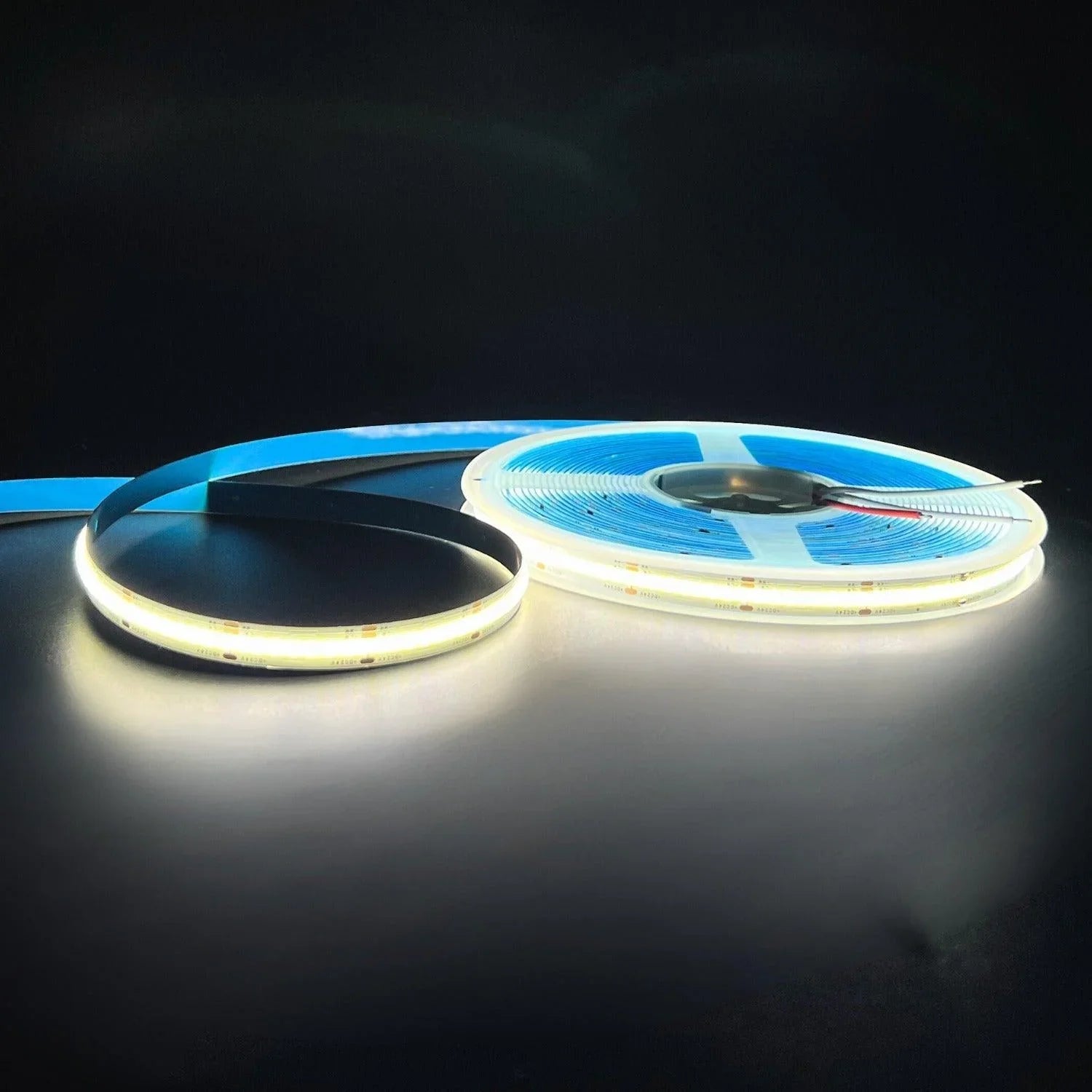
Blue LED Strip Light 12V 240 LEDs/m 1200 LEDs IP20 Non Waterproof 5 Metre Strip

Regular price £48.54
Sale price £48.54 Regular price
CCT Seamless COB LED Strip 24V 780 LEDs/m IP20 Waterproof WW+CW 10 Metre Kit - ATOM LED
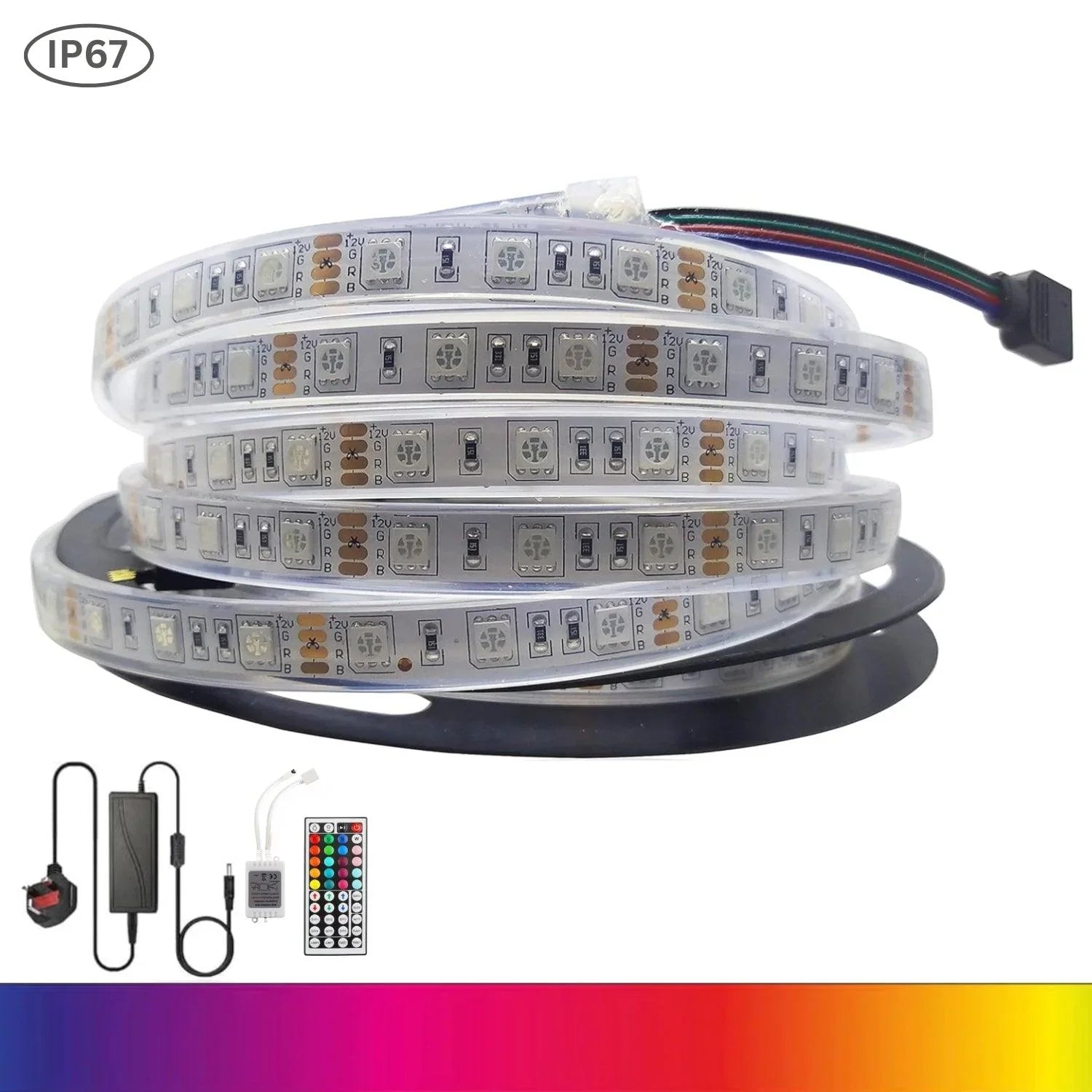
CCT Seamless COB LED Strip 24V 780 LEDs/m IP20 Waterproof WW+CW 10 Metre

  • CCT COB Strip
  • 2700K-6000K
  • IP20 non waterproof
  • 24V
  • 1.93cm (19.3mm) Cut
  • 624 LEDs/m
Regular price From £39.85
Sale price From £39.85 Regular price
View Product
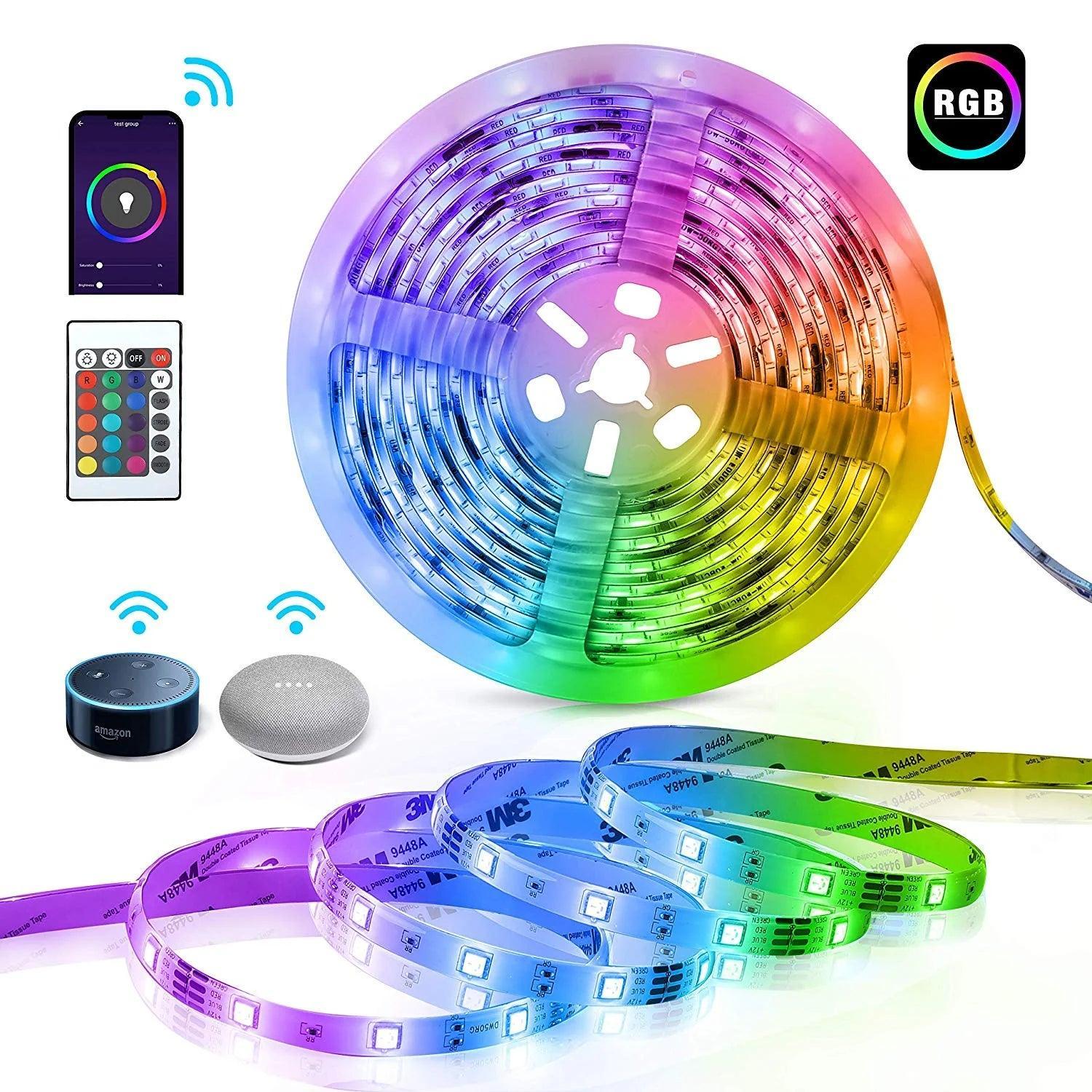
rgb led strip 12v 5050 5 metre ip67

RGB LED Strip 12V 5050 IP67 Waterproof 60LED/m For Outdoor Use 5 Metre Kit
Regular price £45.90
Sale price £45.90 Regular price
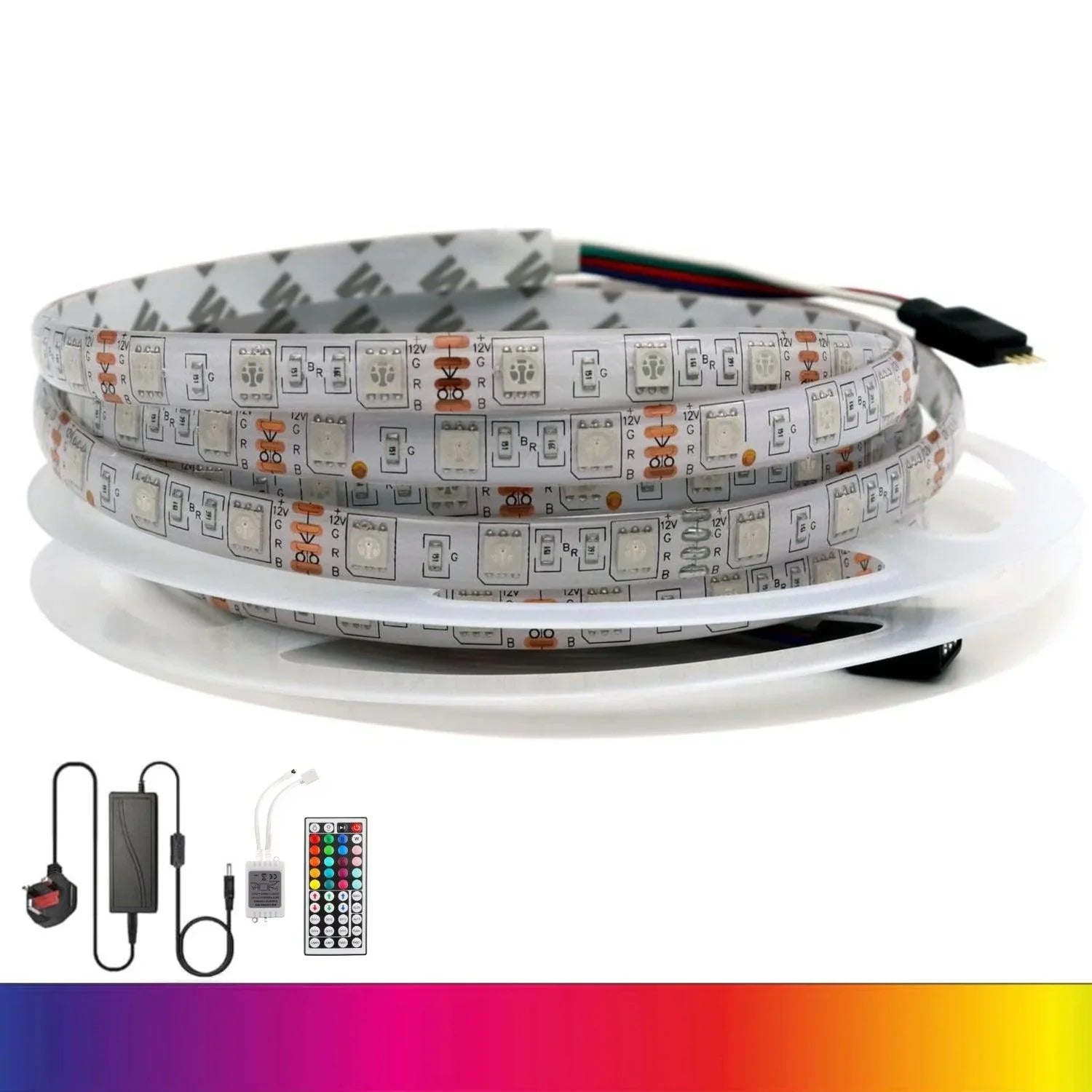
RGB LED Strip 5050 12V WiFi Control RGB LED Strip IP67 Waterproof 300LEDs 5m Full Kit Compatible with Alexa and Google Home - ATOM LED

RGB LED Strip 5050 12V WiFi Control RGB LED Strip IP67 Waterproof 300LEDs 5m Full Kit Compatible with Alexa and Google Home
Regular price £45.08
Sale price £45.08 Regular price
rgb led strip 12v 5050 5 metre ip68

RGB LED Strip 12V 5050 IP20 Non-Waterproof 60LED/m 5 metre Kit
Regular price £27.85
Sale price £27.85 Regular price
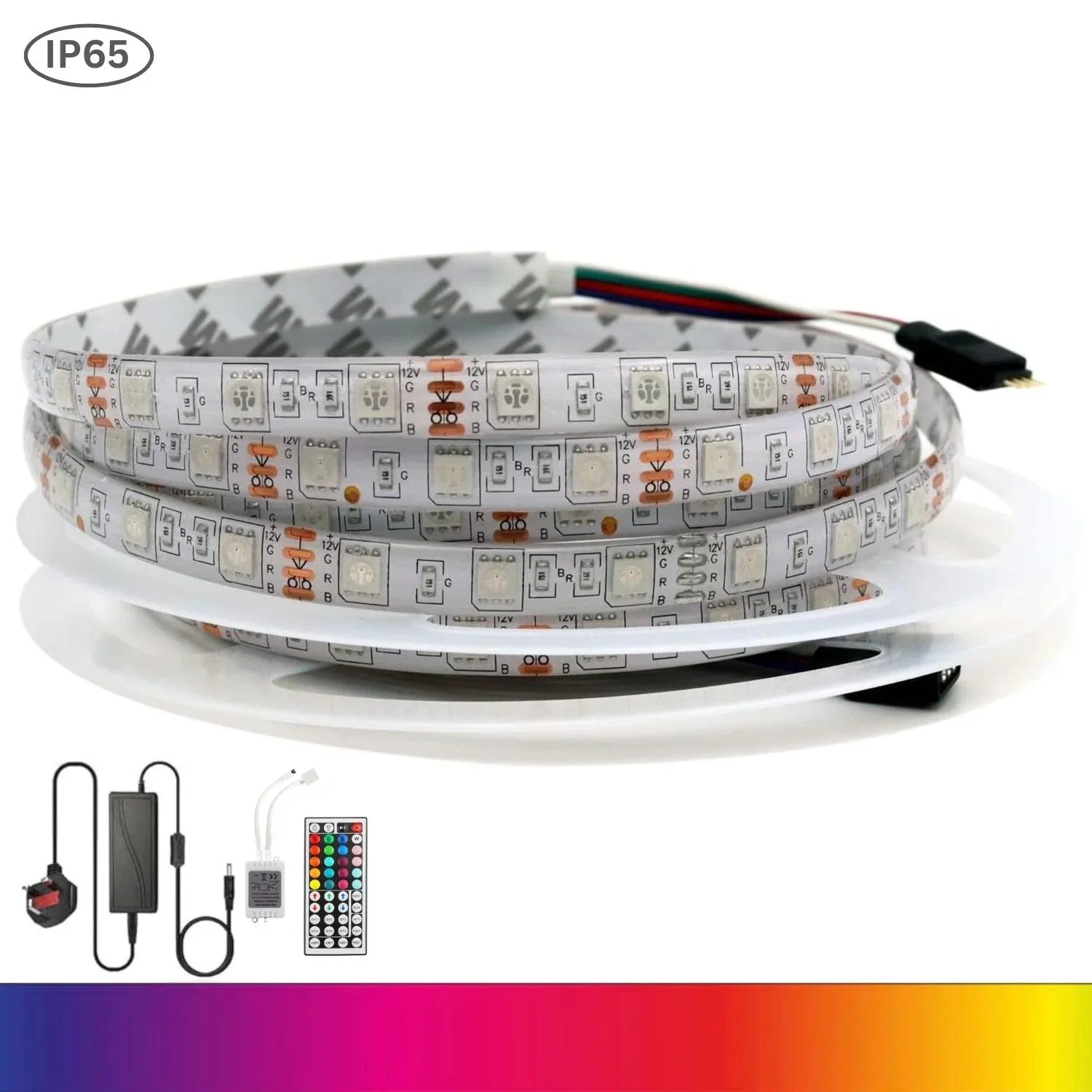
RGB LED Strip 12V IP65 Waterproof 60LED/m 5 metre Kit
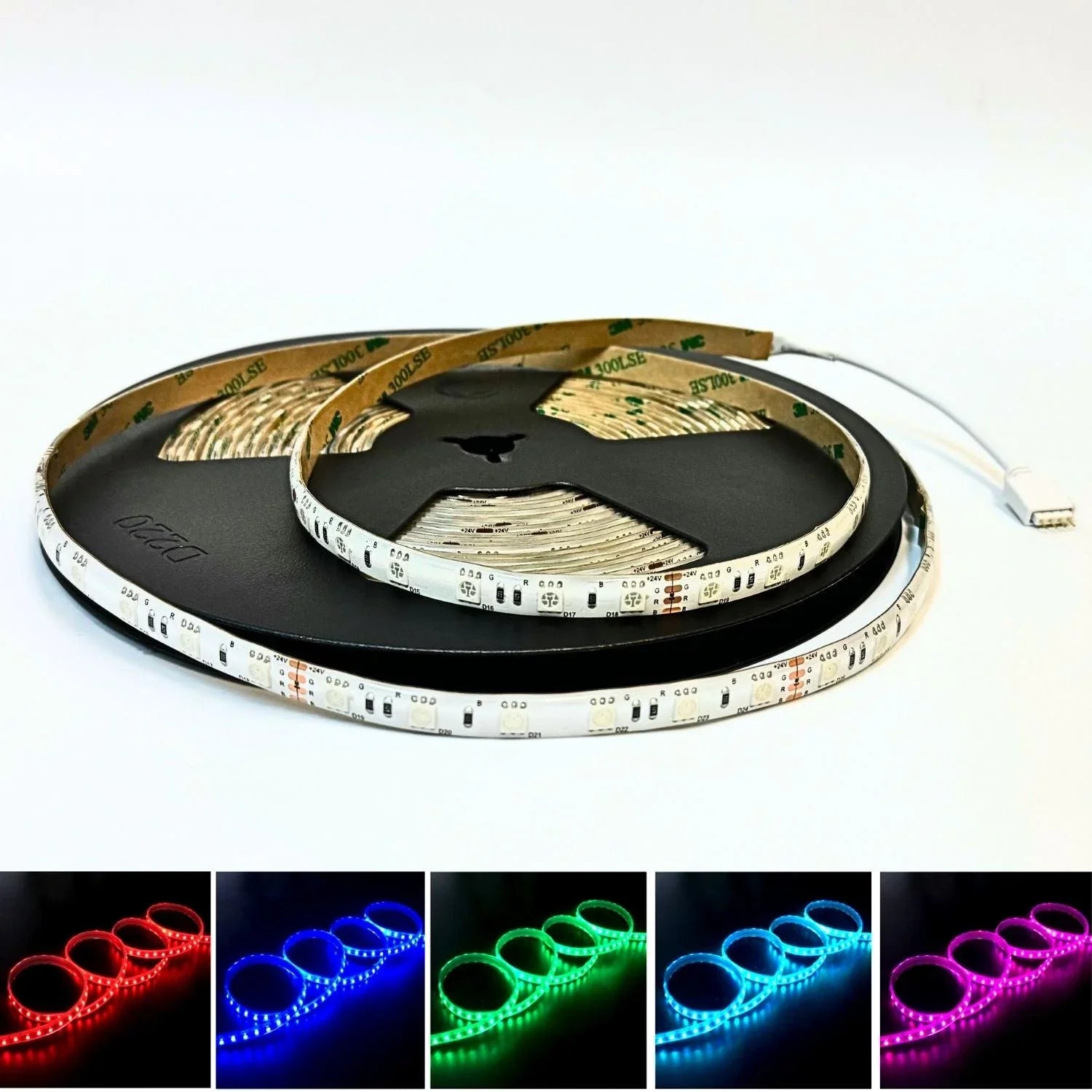
RGB LED Strip 12V IP65 Waterproof 60LED/m 5 metre Kit

Regular price £31.85
Sale price £31.85 Regular price
RGB LED Strip with Remote 24V 10 Metre One Length 5050 IP65 60LED/m Full Kit - ATOM LED
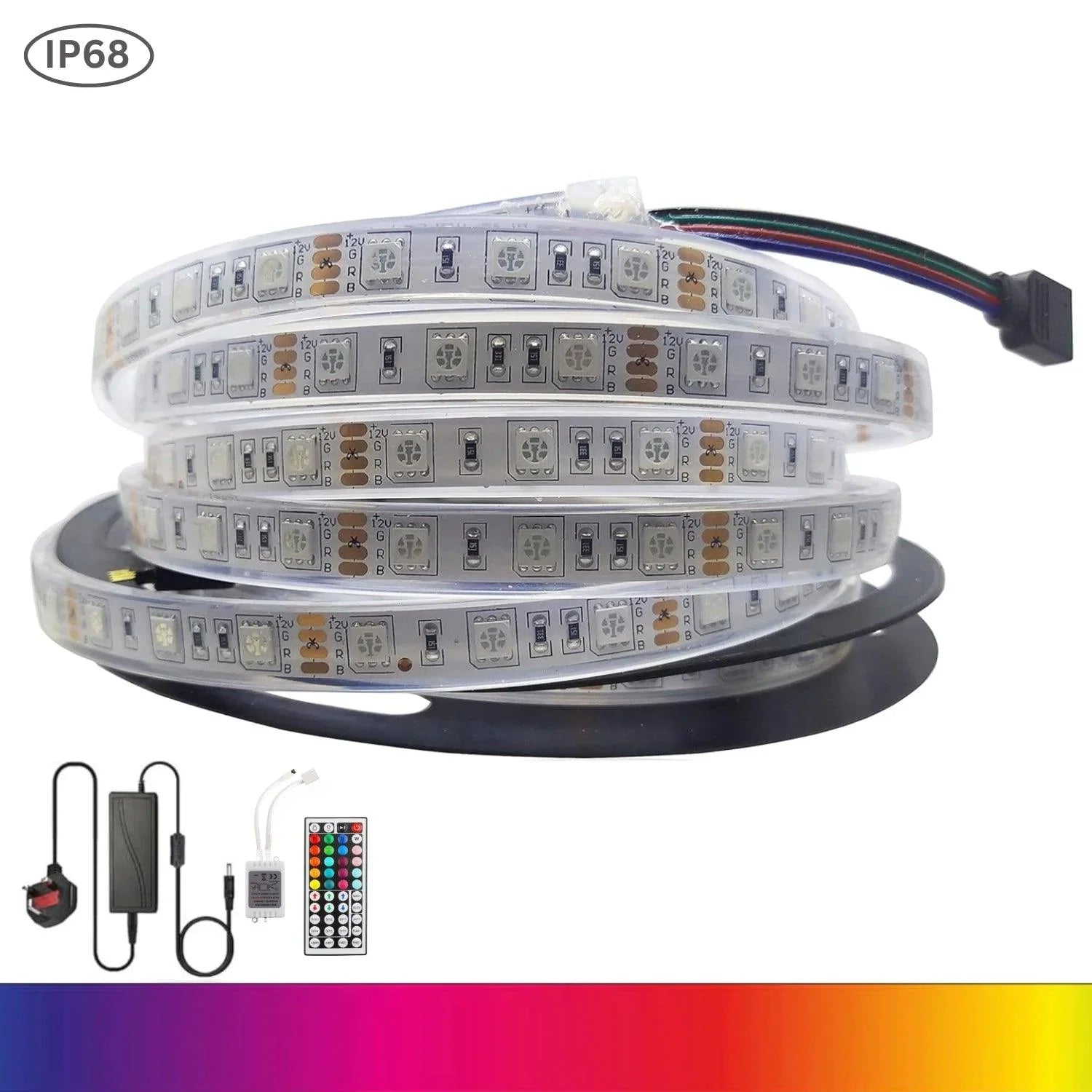
RGB LED Strip with Remote 24V 10 Metre One Length 5050 IP65 60LED/m Full Kit

Regular price £110.85
Sale price £110.85 Regular price
rgb led strip 12v 5050 5 metre ip68

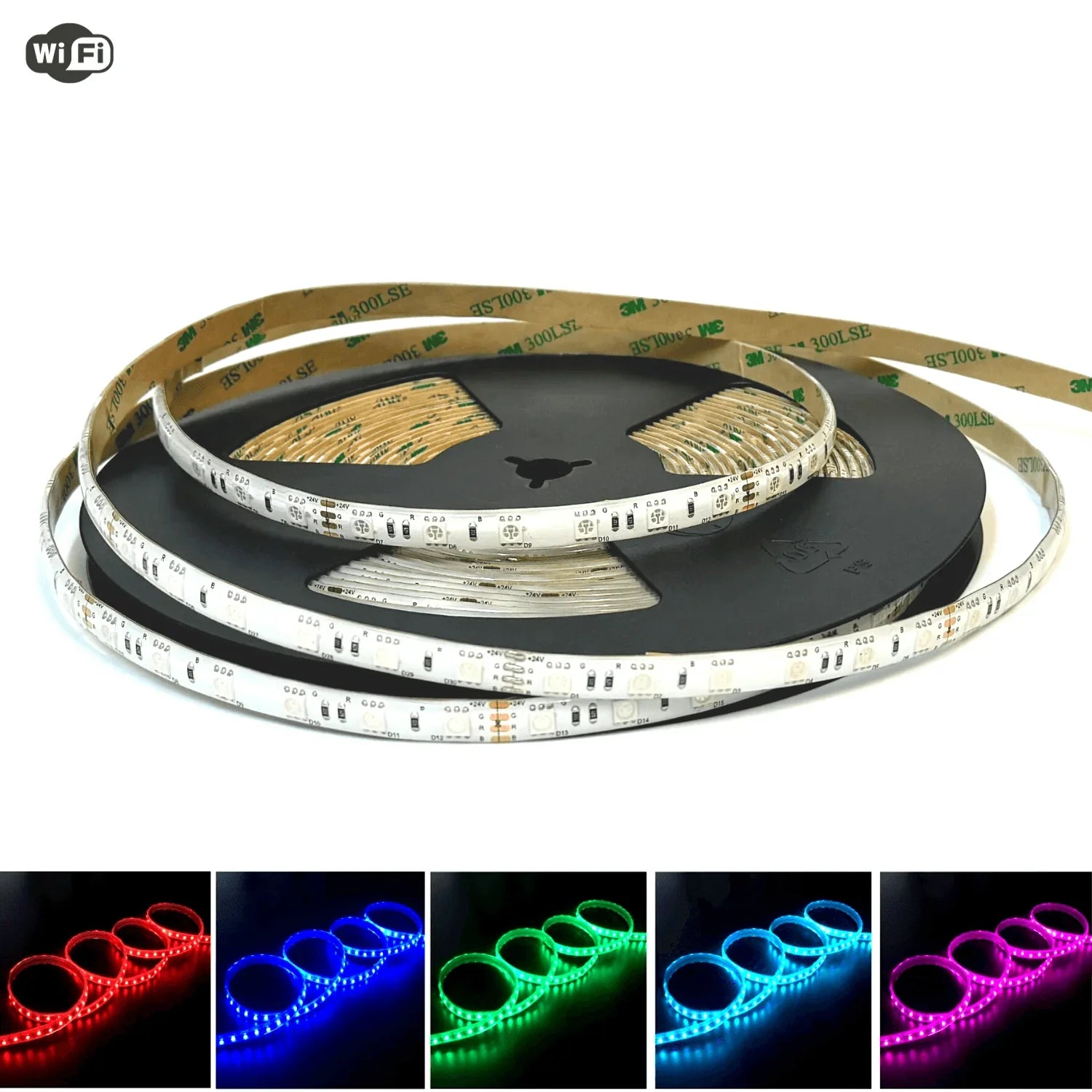
RGB LED Strip 12V 60LEDs/m IP68 Fully Waterproof Dimmable 5 Metre Kit
Regular price £65.85
Sale price £65.85 Regular price
RGB LED Strip with WiFi Controller DC 24V 10m One Length 5050 IP65 Waterproof 60LED/m Full Kit - ATOM LED
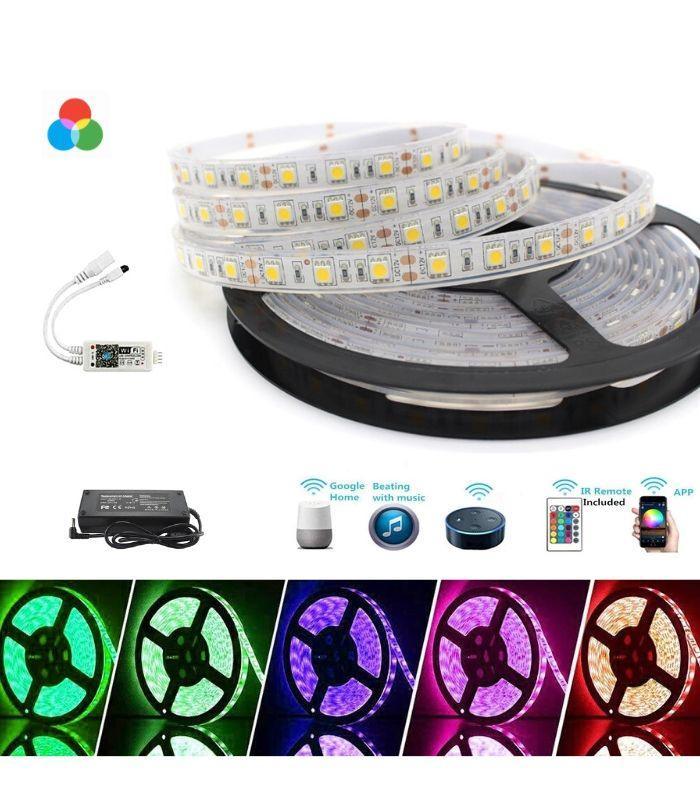
RGB LED Strip with WiFi Controller DC 24V 10m One Length 5050 IP65 Waterproof 60LED/m Full Kit

Regular price £118.85
Sale price £118.85 Regular price
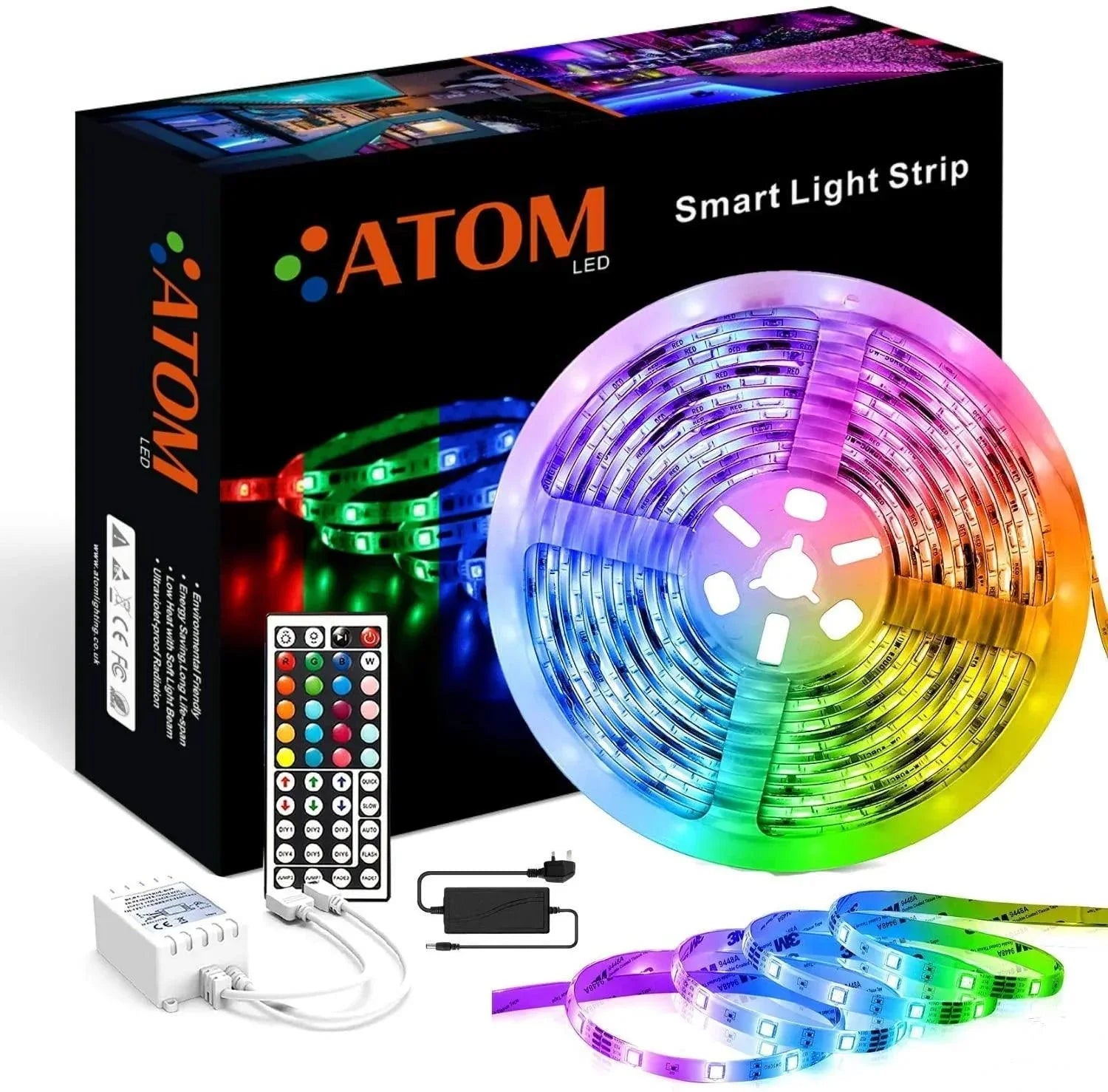
SMD5050 WiFi Wireless Control RGB LED Strip 12V IP65 Waterproof 150LED 5m Full Kit Compatible with Alexa and Google Home - ATOM LED

SMD5050 WiFi Wireless Control RGB LED Strip 12V IP65 Waterproof 150LED 5m Full Kit Compatible with Alexa and Google Home
Regular price £40.37
Sale price £40.37 Regular price
RGB LED Strip 12V 5050 12V IP20 Non Waterproof 300LED 10 Metre Kit
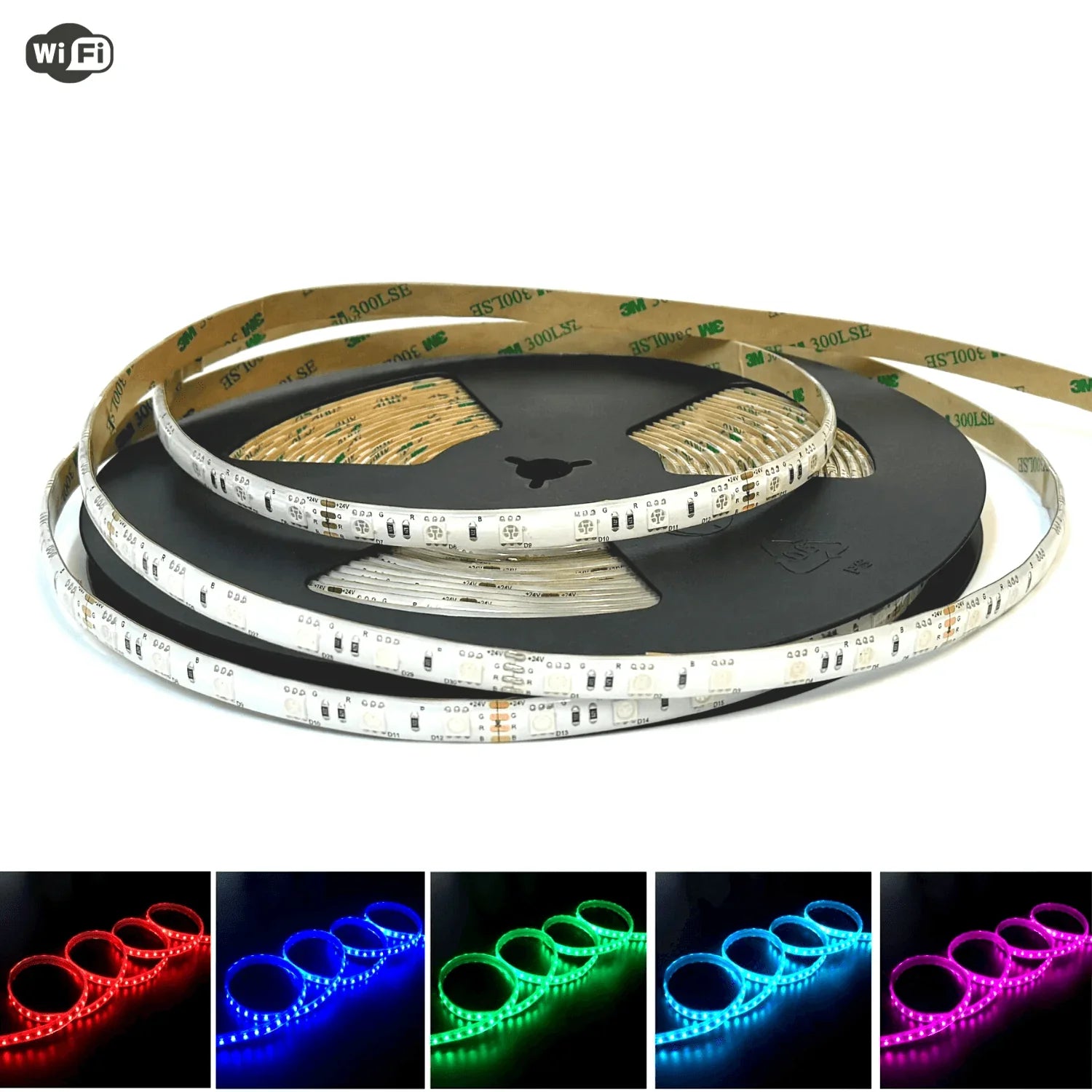
RGB LED Strip 12V 5050 12V IP20 Non Waterproof 300LED 10 Metre Kit

Regular price £29.24
Sale price £29.24 Regular price
RGB LED Strip with WiFi Controller DC 24V 10m One Length 5050 IP65 Waterproof 60LED/m Full Kit - ATOM LED
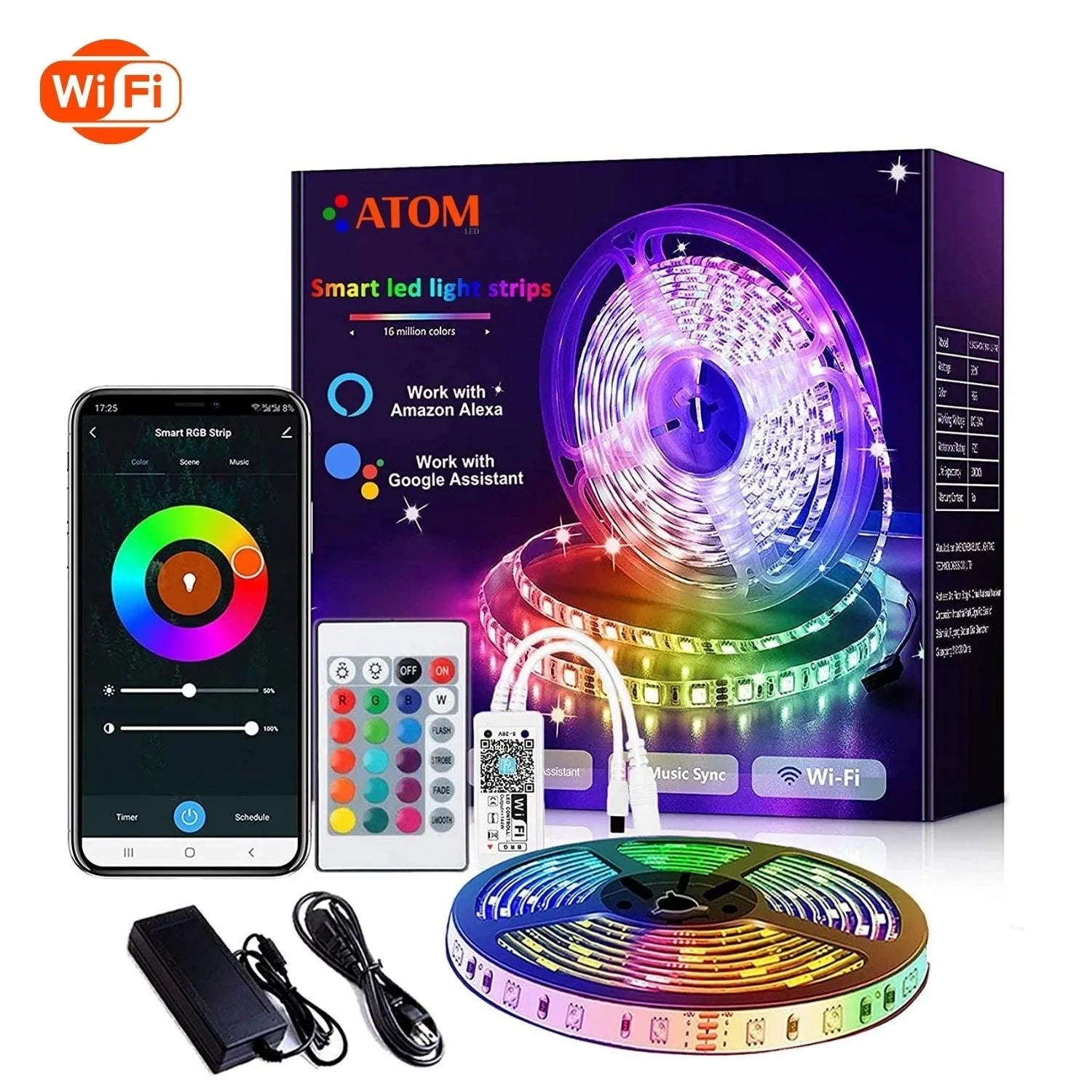
RGB LED Strip with WiFi Controller DC 24V 10m One Length 5050 IP65 Waterproof 60LED/m Full Kit

Regular price £110.85
Sale price £110.85 Regular price
RGB LED Strip 10 Metre (5m+5m) 12V WiFi Wireless Control IP20 Non-Waterproof 300LEDs 10m Full Kit Work with Alexa and Google Home - ATOM LED

RGB LED Strip 12V IP20 Non-Waterproof 300LEDs 10 Metre WiFi Wireless Control Kit
Regular price £34.08
Sale price £34.08 Regular price
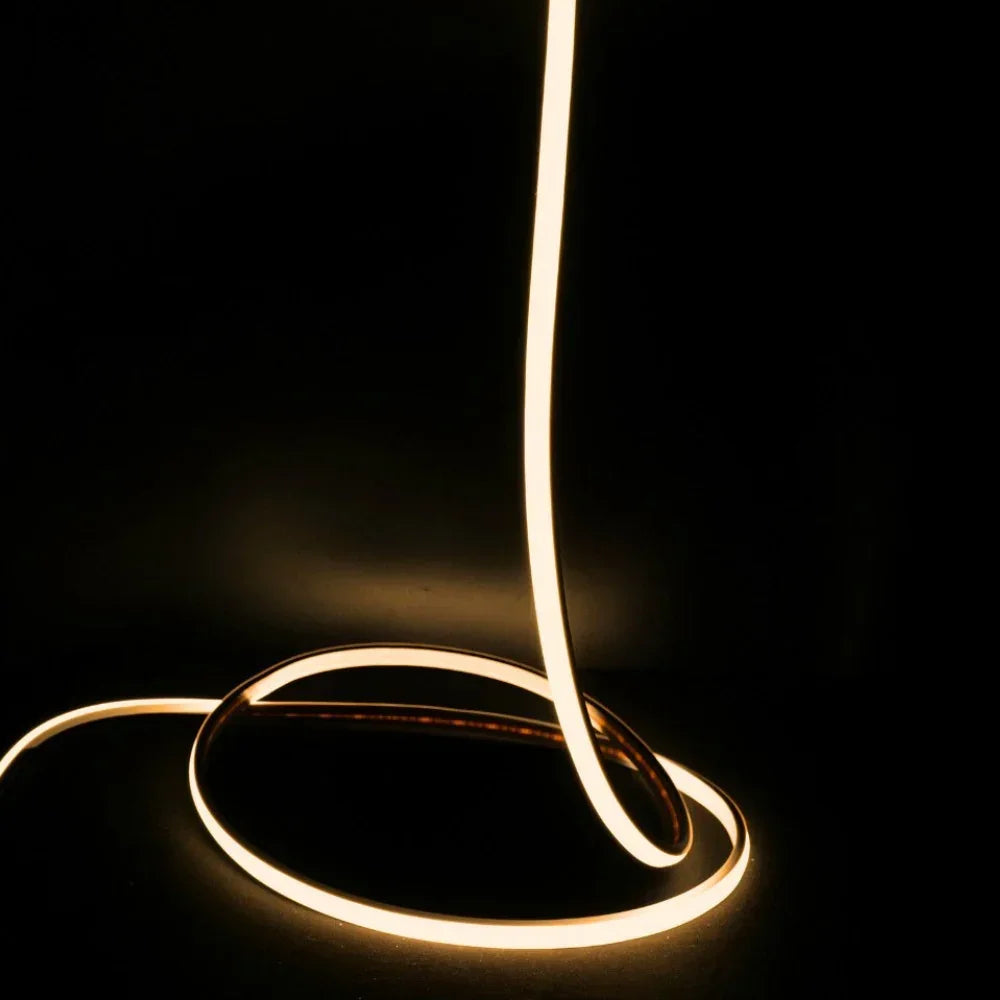
Warm White 3000K COB LED Strip 220V 240V 288 LEDs/m IP65 UK Plug
Warm White 3000K COB LED Strip 220V 240V 288 LEDs/m IP65 UK Plug

  • COB LED Strip
  • 220V 240V
  • 10cm Cut
  • 890 lumens/m
  • 10mm wide
  • 288 LEDs/m
Regular price From £16.95
Sale price From £16.95 Regular price
View Product
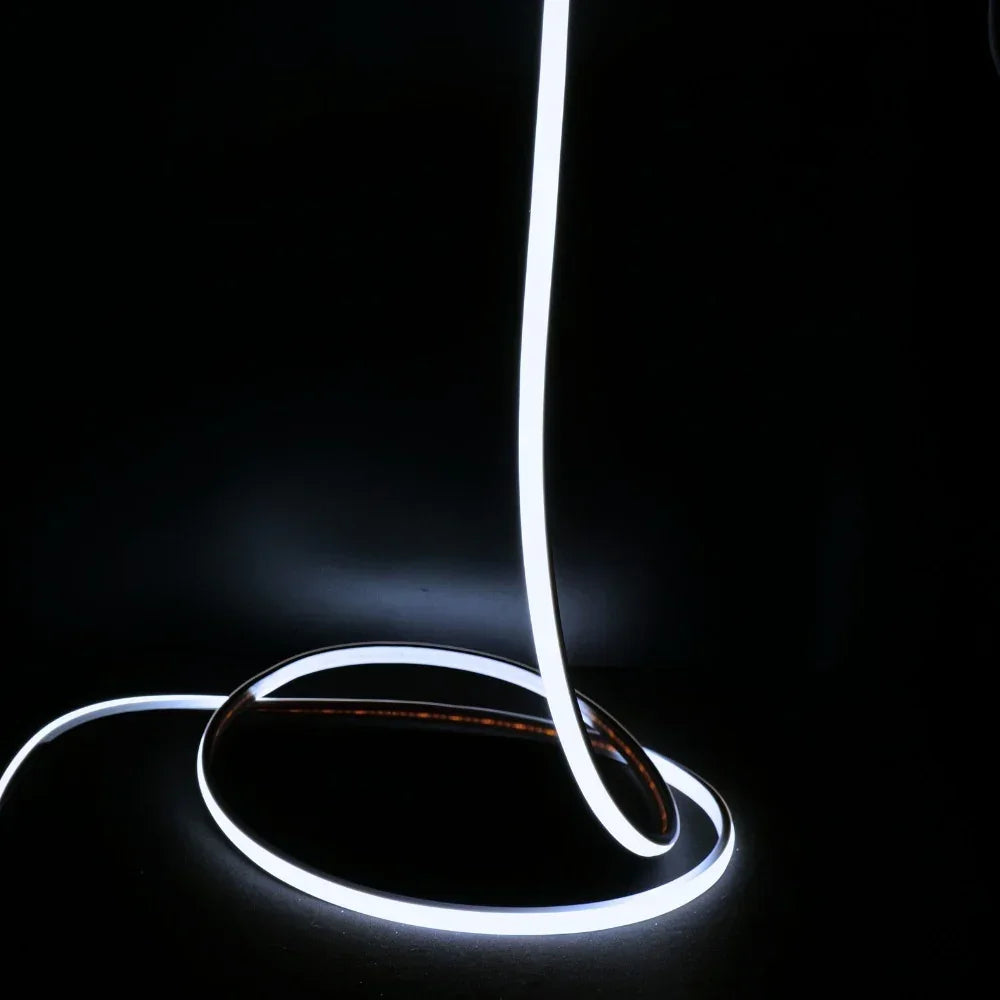
Cool White 6000K COB LED Strip 220V 240V 288 LEDs/m IP65 UK Plug

Cool White 6000K COB LED Strip 220V 240V 288 LEDs/m IP65 UK Plug

  • COB LED Strip
  • 220V 240V
  • 10cm Cut
  • 890 lumens/m
  • 10mm wide
  • 288 LEDs/m
Regular price From £16.95
Sale price From £16.95 Regular price
View Product